Roots at Mercato Beach: A Reflection on Dubai’s Evolving Public Art Landscape
A sculptural reflection on heritage, nature, and Dubai’s evolving cultural landscape
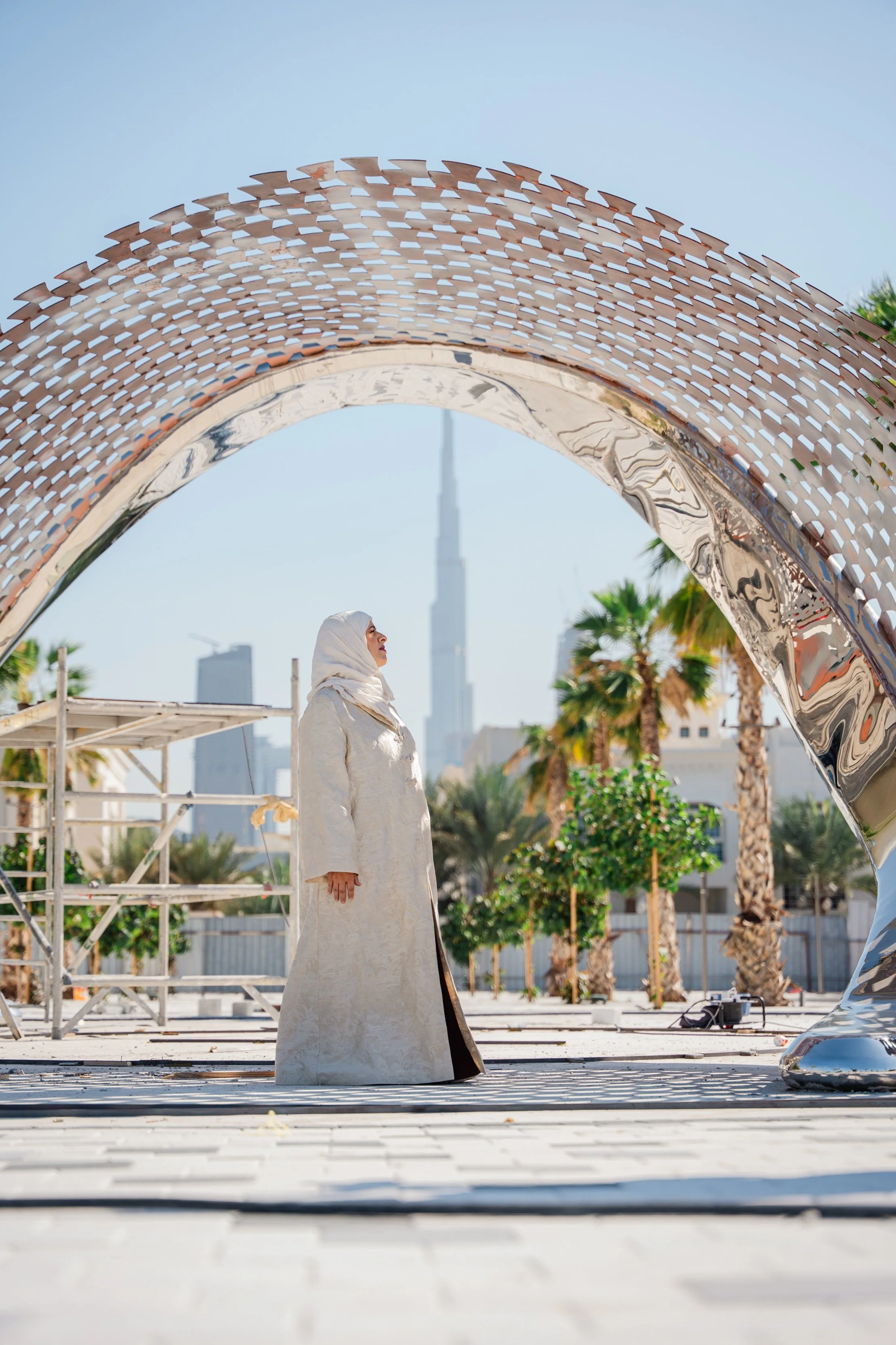
Along the shoreline of Jumeirah, where the rhythm of the Arabian Gulf meets the ever-evolving skyline of Dubai, a new sculptural presence quietly anchors itself within the landscape. Installed at Mercato Beach, Roots by Azza Al Qubaisi is the latest unveiling by Dubai Culture and Arts Authority; a work that feels both grounded in heritage and forward-looking in its ambition.
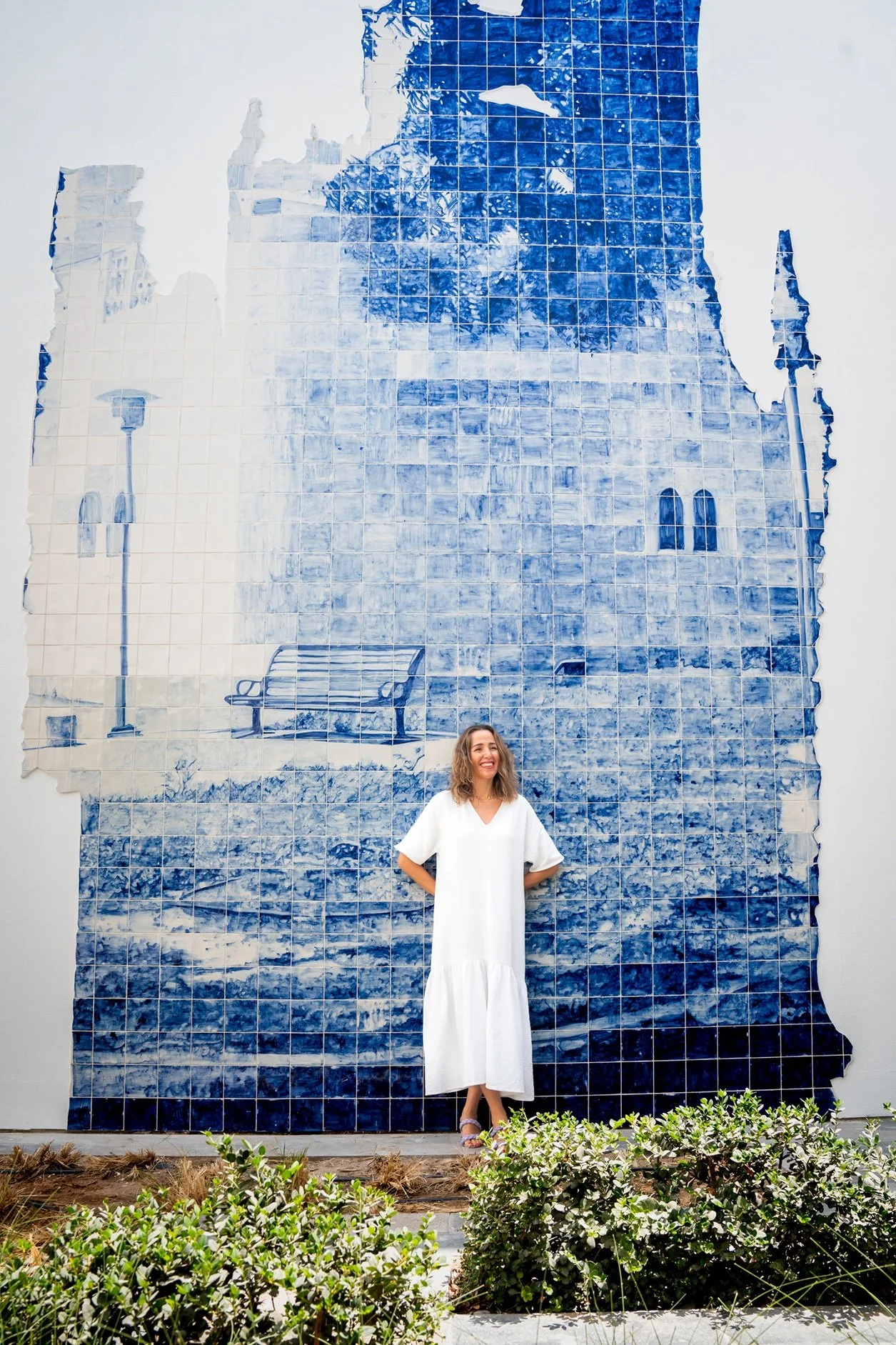
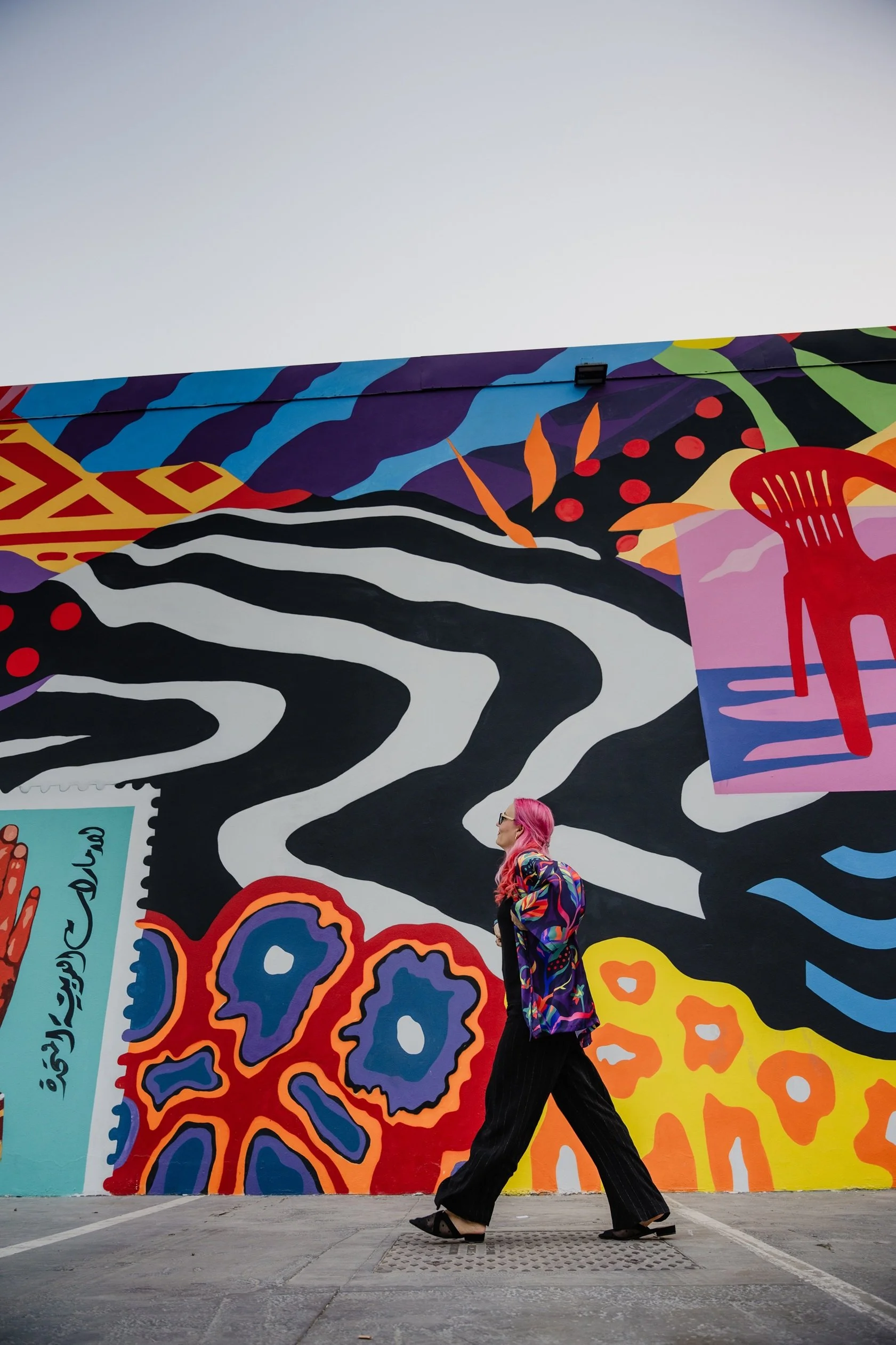
Part of the emirate’s wider Public Art Strategy, the installation contributes to a growing narrative: one where the city itself becomes an open-air gallery. This initiative is not simply about placing artworks in public spaces; it is about embedding culture into the everyday experience of the city, transforming moments of transit into moments of reflection.
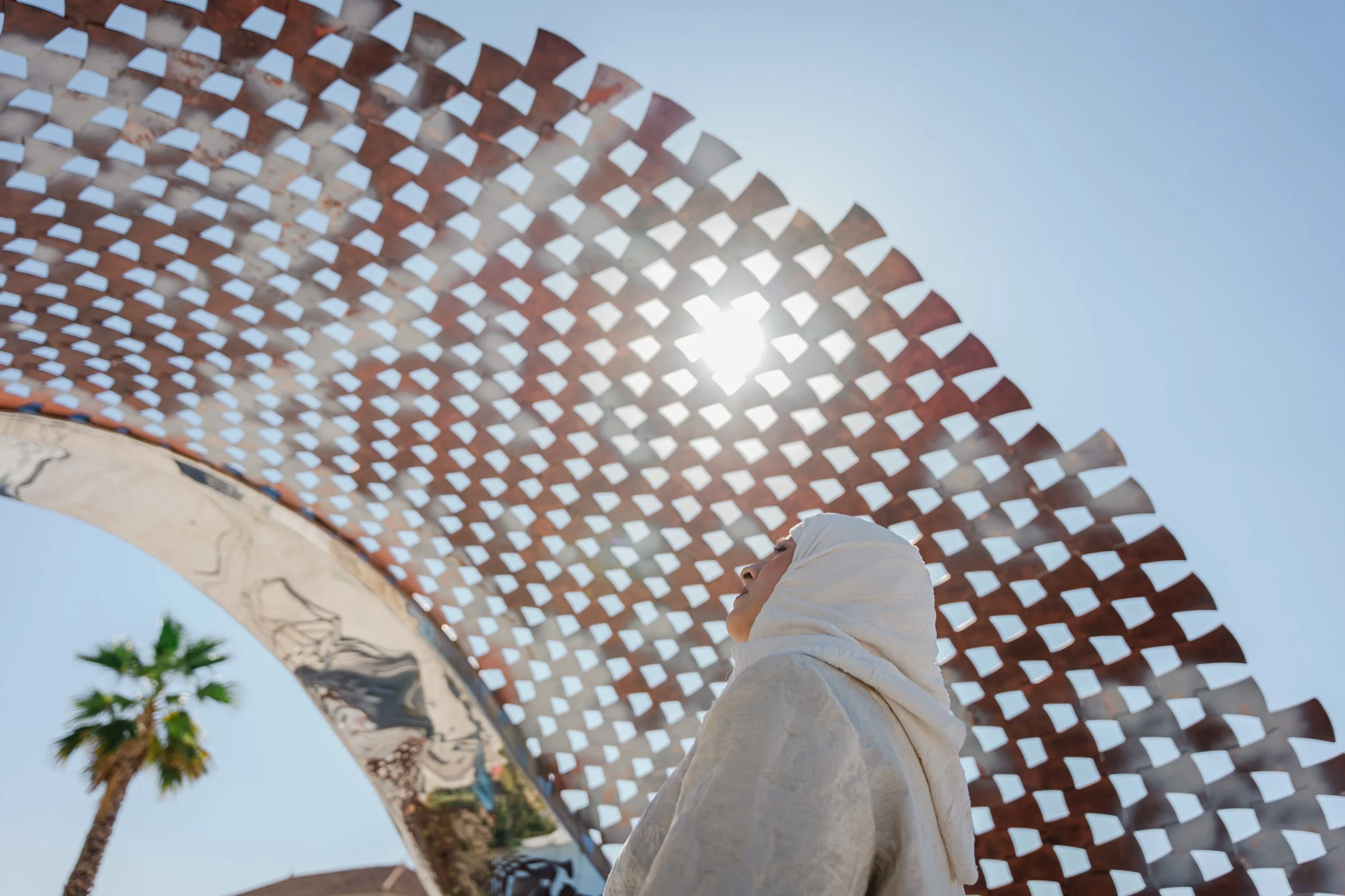
For me, this is one of the most compelling aspects of Dubai today. The public art programme feels increasingly visible, increasingly intentional. There is something genuinely refreshing about encountering art not within the confines of a gallery, but woven into daily life, along a beachfront, beside a road, or framed against the skyline. Art, in this sense, becomes less of a destination and more of a constant companion. And in a city defined by momentum, that pause, however brief, feels essential.
At its core, Roots draws from one of the UAE’s most enduring symbols: the palm tree. Long regarded as the “fabric of life,” it represents nourishment, shelter, and resilience, qualities deeply embedded in the country’s identity. Al Qubaisi translates this symbolism into a sculptural language that feels both tactile and fluid, echoing the textures and patterns of palm trunks while simultaneously abstracting them into something contemporary.
Yet the work extends beyond a singular reference. There is a clear sense of movement embedded within its form; gestures that mirror wind sweeping across desert dunes, waves folding onto the shoreline, and birds tracing ephemeral paths across the sky. These natural rhythms are distilled into a unified visual expression, allowing the sculpture to resonate not only as an object but as a reflection of the environment in which it sits.
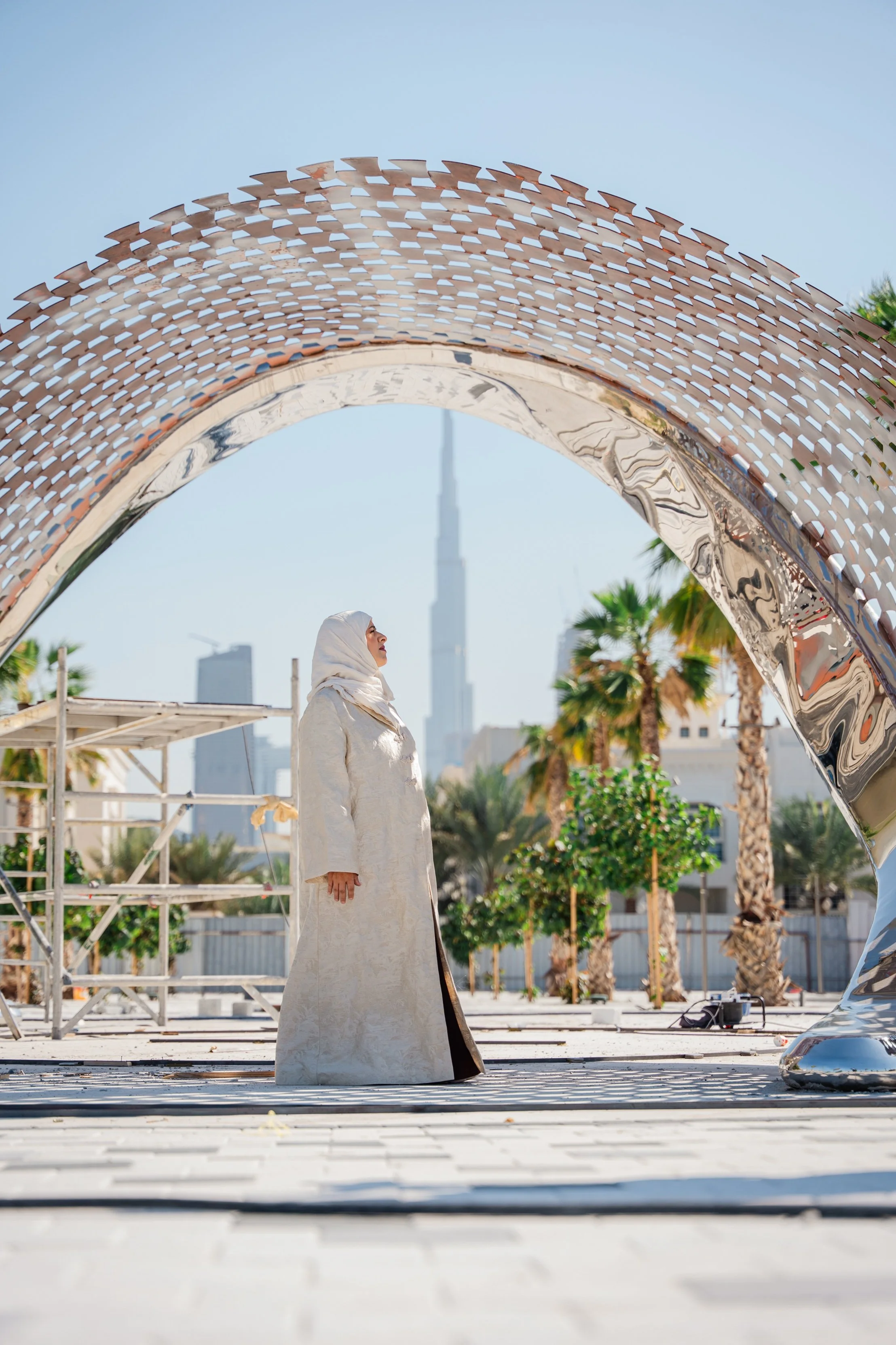
Positioned as a protective, almost architectural structure, Roots takes on the form of a shield. It offers shade, invites interaction, and subtly encourages visitors to slow down. As you pass beneath it, the experience shifts: the sea opens up ahead, while behind, the city reveals itself in layers, culminating in the distant presence of the Burj Khalifa. In this moment, the artwork becomes a frame, capturing both nature and urbanity in a single, carefully composed view.
Materiality plays a crucial role in this dialogue. Stainless steel introduces a reflective, almost future-facing quality, mirroring its surroundings and reinforcing Dubai’s forward momentum, while palm fibre grounds the piece in something more tactile and historic. The interplay between these elements feels deliberate: a conversation between what has been and what is yet to come.
This duality is perhaps what makes Roots so resonant. It is not simply a sculpture placed within a landscape; it is a work that actively connects past and present, land and city, tradition and innovation. This reflects a broader ambition that the Dubai Culture and Arts Authority continues to articulate through its initiatives: shaping a cultural identity that is both deeply rooted and globally relevant.
As Dubai continues to expand, both physically and culturally, projects like this suggest a more nuanced approach to growth. One that values not only scale and spectacle, but also meaning, memory, and human experience.
And perhaps that is why Roots feels significant. It reminds us that art does not need to be monumental to be impactful. Sometimes, it is enough for it to exist quietly along our daily paths, offering a moment to pause, reflect, and reconnect.
In a city that rarely stands still, that is something worth holding onto.
More Stories