The Museum of the Future
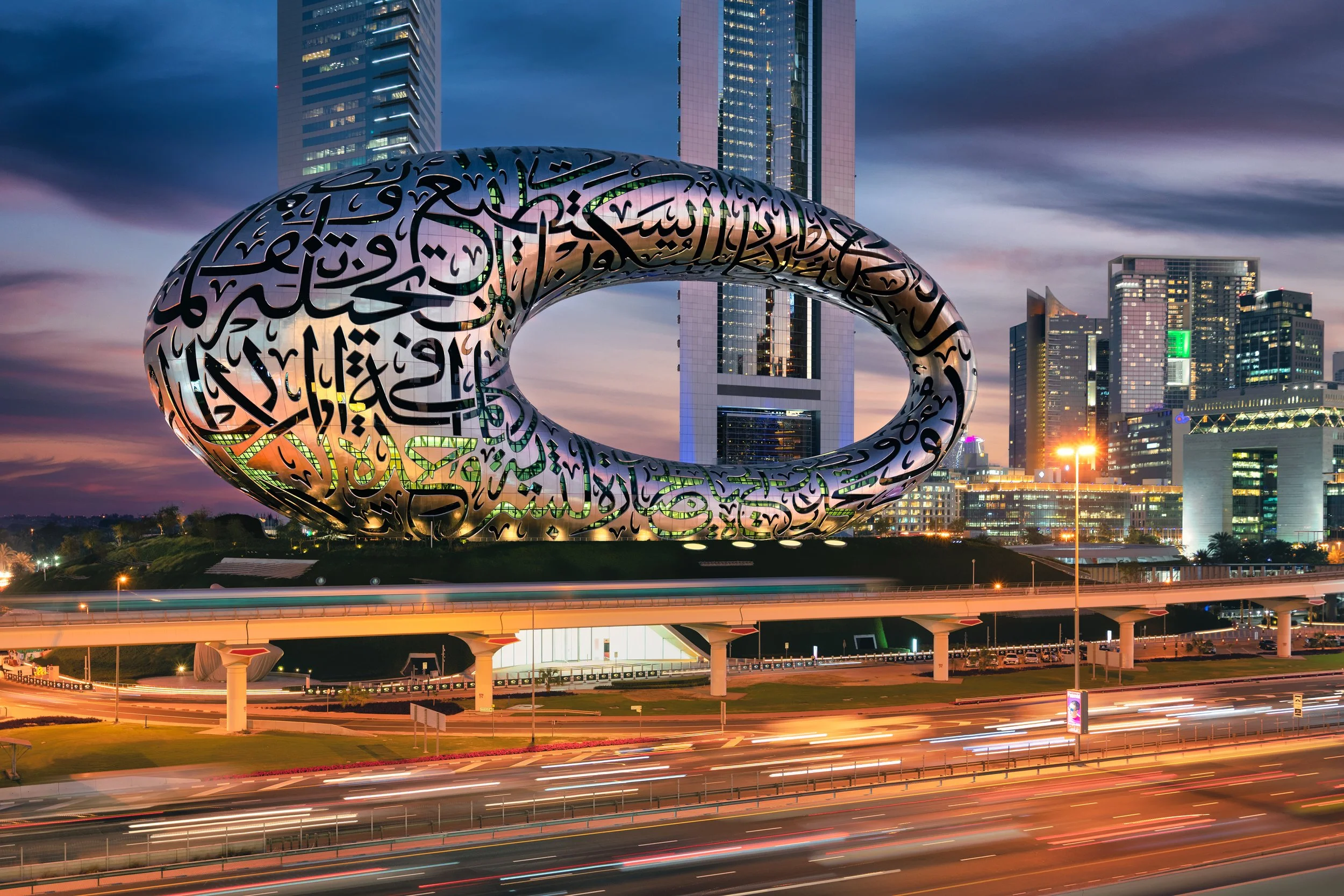
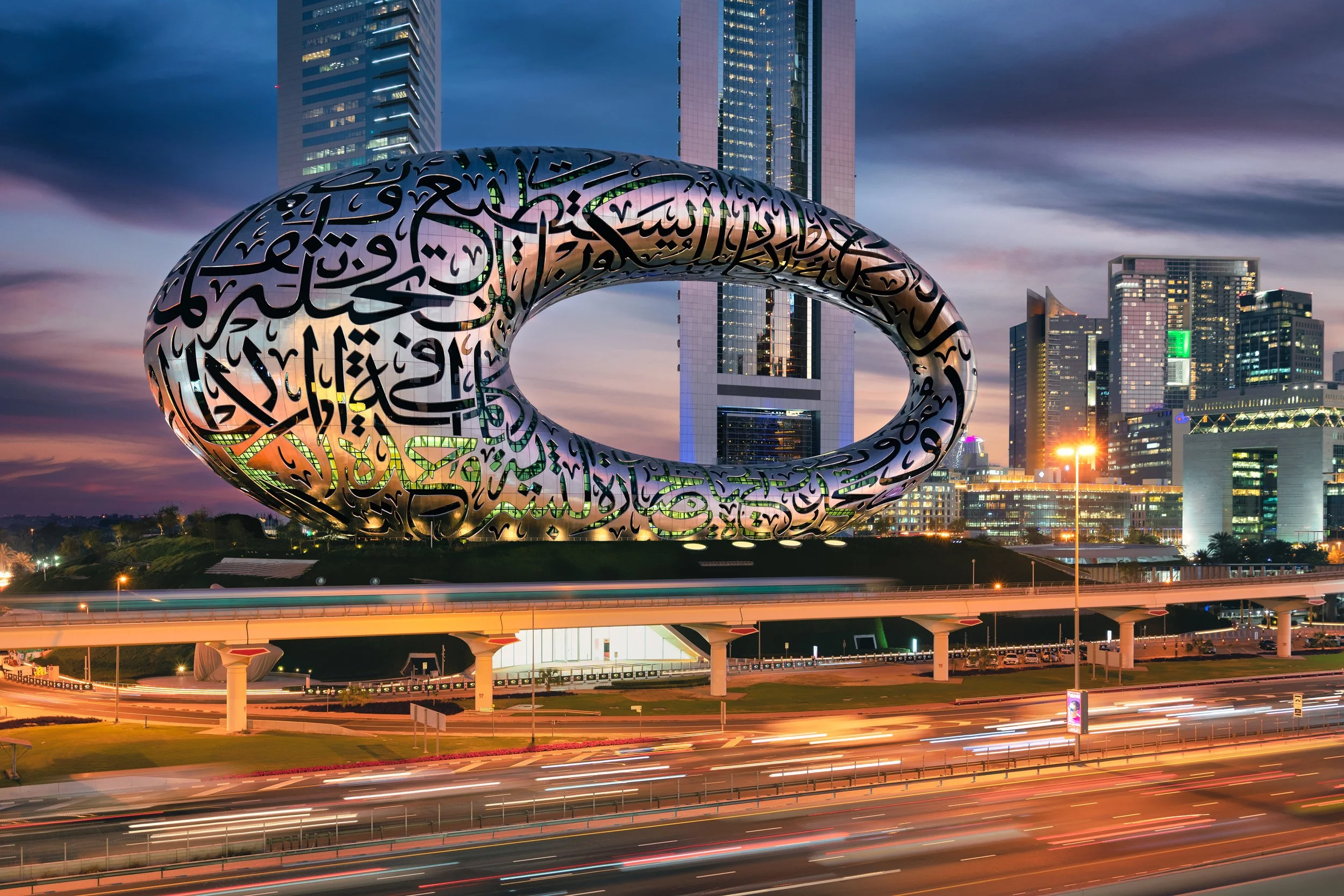
There is a moment, approaching along Sheikh Zayed Road, when Dubai’s Museum of the Future seems to hover above its landscaped hill like a polished mirage. The torus form, laced with illuminated Arabic calligraphy, pulls you in before you’ve even crossed the bridge from Emirates Towers Metro. Inside, the building reveals itself less as a museum and more as a choreographed journey through possibilities; a narrative told with light, sound, and human curiosity.
Arriving at a Vision
The approach matters. If you arrive by metro, you step directly from Emirates Towers Station (Red Line) onto a link bridge that frames the building’s elliptical void; a practical and poetic introduction in one move. The connection is seamless, and for first‑time visitors, it’s the most stress‑free way to start the experience.
Stepping through the 16‑metre‑high lobby, the city falls away. White, flowing surfaces and a double‑helix staircase draw the eye as sunlight filters through calligraphic apertures, sketching shadows that change by the minute. That constant play of light is the building’s quiet narrative: outside, the city moves at speed; inside, time is made elastic. (Architectural details aside, the museum’s own visitor materials underscore that each floor functions like an interactive set; storytellers and technologists guiding you through a cinematic sequence of chapters.)


The Journey Up: Into Tomorrow’s Worlds
Most visits begin with a vertical leap: panoramic elevators glide through the atrium, staging your ascent like a prologue to spaceflight. Within minutes, you’re “orbiting” on OSS Hope, a fiction‑made‑physical where views of Earth and mission briefings situate you in the year 2071: the museum’s chosen horizon for imagining the UAE’s centenary. For many, it is the trip’s first dislocation: a museum that doesn’t archive the past but prototypes futures, inviting visitors to test assumptions rather than admire relics.


Level 5 - OSS Hope - photography courtesy of the Museum of the Future
Descending level by level, the tone shifts from cosmic to terrestrial. The Heal Institute renders ecological futures as something deeply sensory: digital biomes, restorative soundscapes, and tangible scenarios that translate climate action into a felt experience. Al Waha (The Oasis) slows the pulse again with wellness‑centric installations and a Sensory Room, a reminder that mental bandwidth is a finite resource in an “always‑on” age. The path then pivots to Tomorrow Today, a rotating showcase of near‑market technologies, grounding the speculative in prototypes you can actually touch. Families peel off toward Future Heroes, a dedicated children’s world of missions and open‑ended play designed to spark problem‑solving and creative agency.
The choreography between spectacle and intimacy is intentional. By alternating theatre‑scale immersion with focused, hands‑on encounters, the museum sustains momentum without overwhelming. Expect to spend 2–3 hours if you skim, and up to 3–4 hours if you pause for details, workshops, or a coffee break. (Timed tickets help regulate flow; more on that below.)
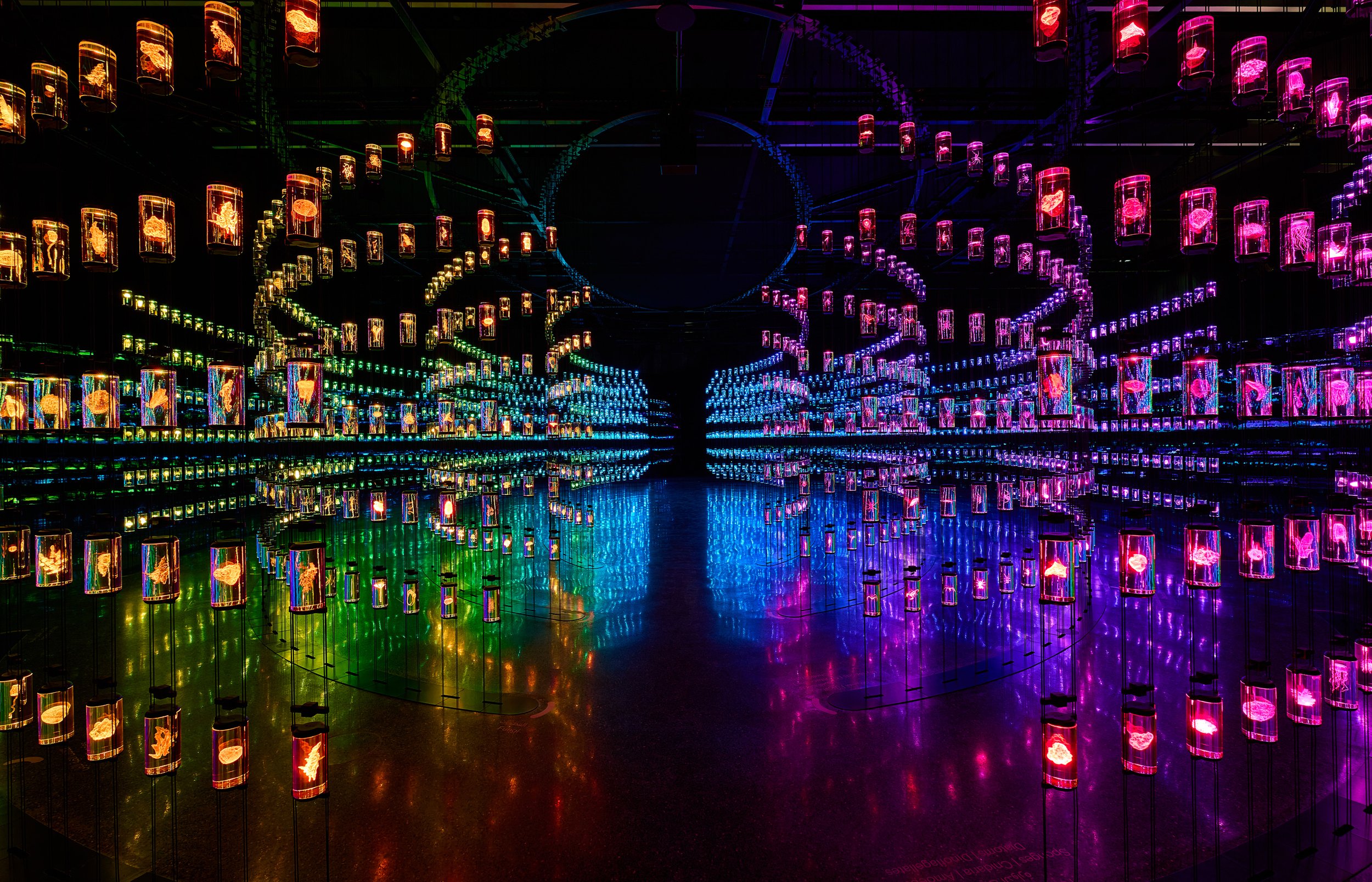


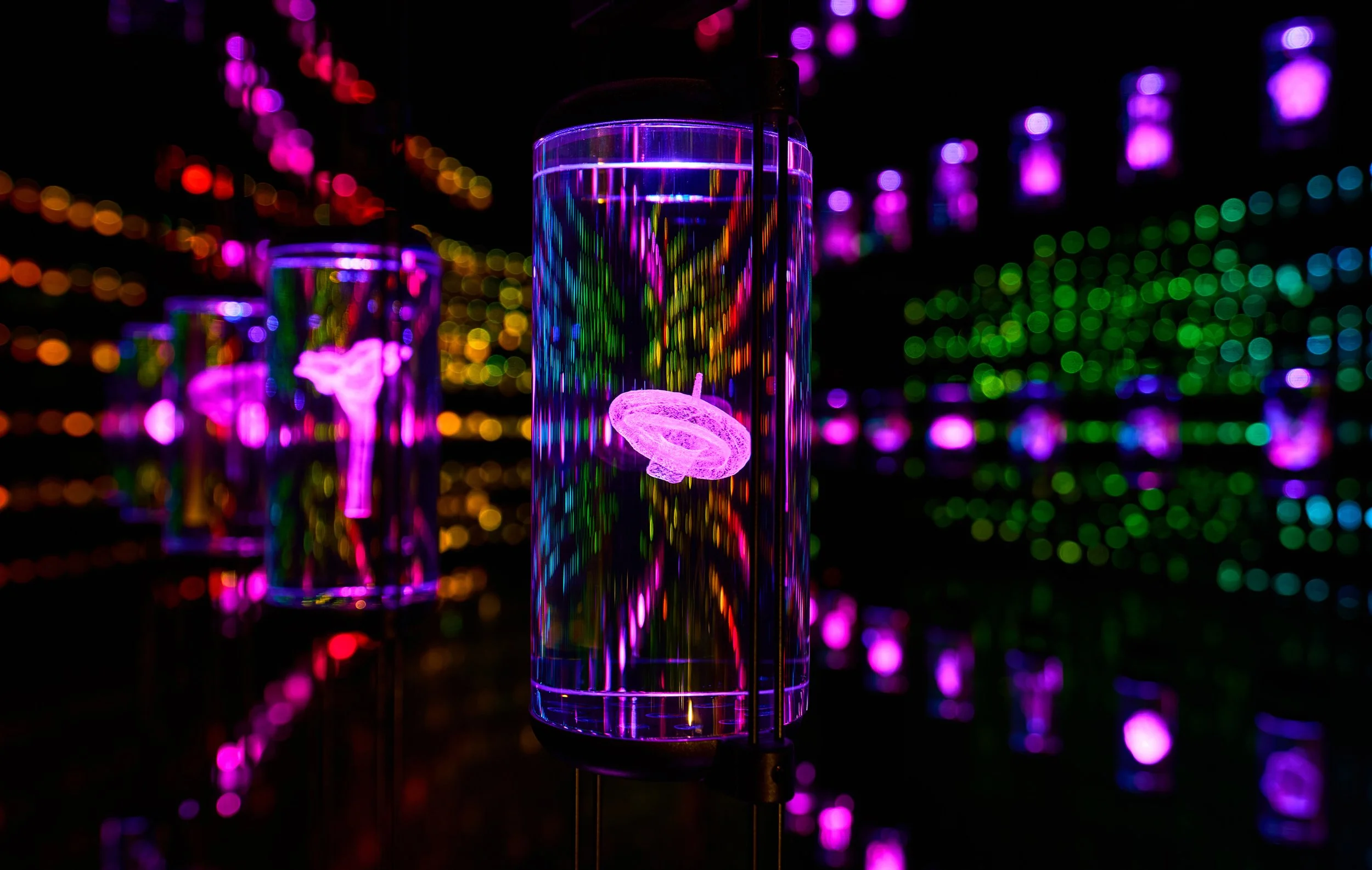
Level 4 - The Heal Institute - photography courtesy of the Museum of the Future
For Design Lovers: Read the Building
Even if you came for the exhibits, linger on the architecture. The torus is designed as a narrative in three parts: the green hill (earth and memory), the reflective ring (humanity and invention), and the central void (the unknown future). Standing on the level‑two viewing deck, you can get close to the inner skin of the void, reading the calligraphy from the inside while catching a surprisingly elevated panorama of Sheikh Zayed Road. It’s the moment where the museum’s symbolism becomes tactile.
Come back at dusk if you can. As night falls, the calligraphic script becomes a lantern for the Financial District, the museum’s words glowing outward as traffic streams below. Photographers will want both views: daylight for texture and night for the neon‑like aura.

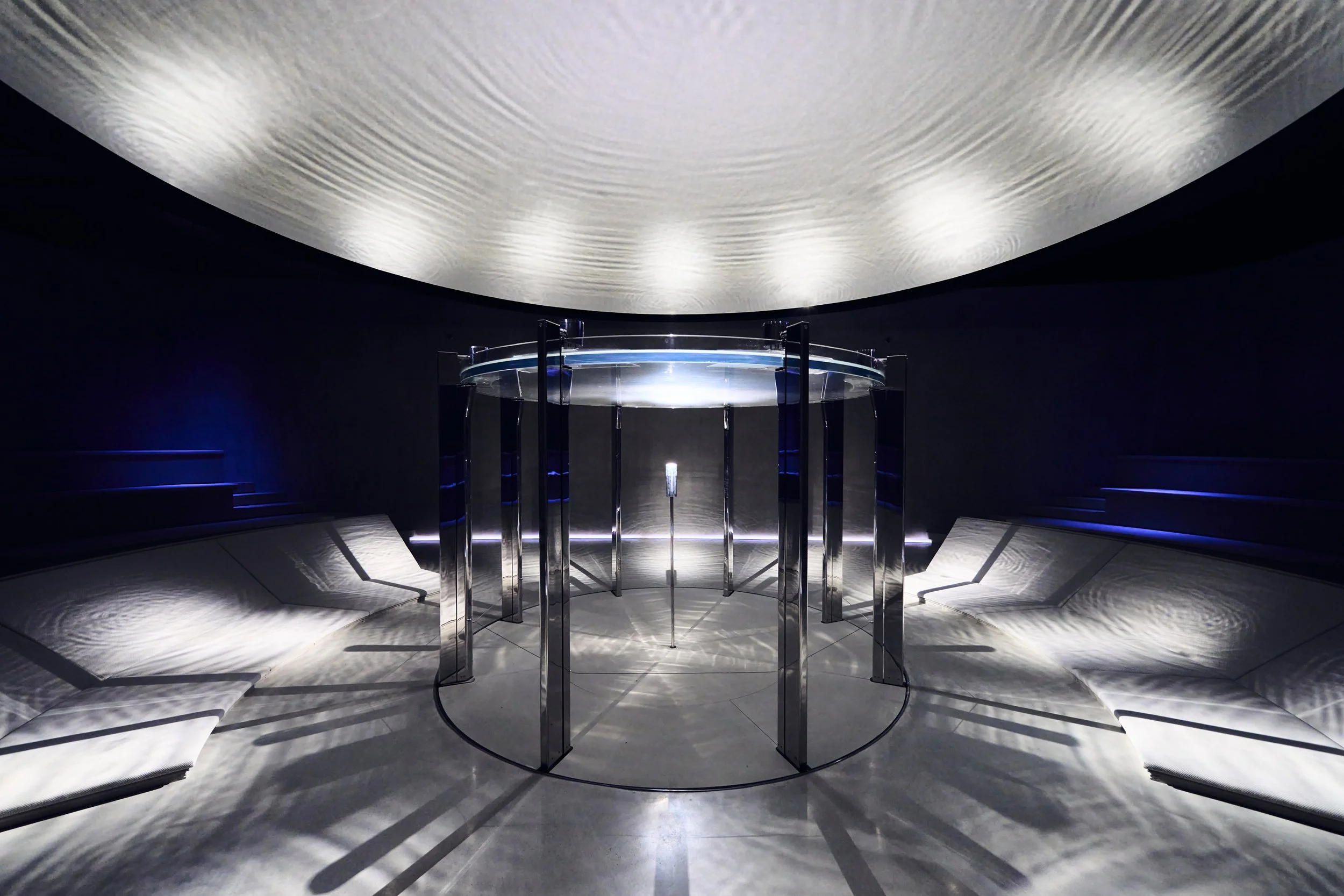


Level 3 - Al Waha - photography courtesy of the Museum of the Future
Practical Guide — Tickets, Timing, and Getting There
Opening hours & last entry
The museum is generally open daily with timed slots; the official guide lists 09:30–21:00, with last admission in the evening (times vary; check your slot). Plan a morning start for quieter galleries, or an early evening for dramatic exterior lighting.
Timed tickets & pricing
Advance booking is essential. Slots often sell out, especially on weekends and during holidays. The official site notes date‑ and time‑specific tickets and confirms free entry for children under 4 and People of Determination plus one caregiver(collected onsite with ID). Standard entry is listed at AED 169 on the museum’s booking page; third‑party guides may show other figures or offers, but defer to the official site for current rates and eligibility.
Location & transport
The best access is the Dubai Metro, Emirates Towers (Red Line) via the dedicated bridge. Buses 27, 29, X22 also serve the area. If you drive, note limited, chargeable self‑parking and consider off‑peak slots; valet may be available, but capacity is finite. Expect demand to spike in the evenings and at weekends.
Parking tips
On-site parking is limited and paid; several nearby garages on Sheikh Zayed Road can serve as overflow when the museum’s lot is full. Plan a short walk if you park offsite, or opt for the metro to avoid delays.
Average visit length
Most travellers spend 2–3 hours; design and tech enthusiasts, families with children, or content creators should allow 3–4 hours to cover all floors and make stops for photography.
Accessibility & families
The museum is fully accessible and welcomes all ages. Future Heroes is curated for children (ages 3–10), and under‑4s enter free (collect tickets on site with ID). Children 15 and under must be accompanied by an adult. Prams are common; lifts are spacious.
When to go
Weekday mornings are consistently quieter; shoulder seasons (spring and autumn) bring milder weather for exterior photography. Evening slots reward you with the illuminated façade; mornings give softer interior light and fewer crowds.
Photo etiquette
Photography is generally allowed in public areas and most exhibits; be mindful of other visitors and any staff guidance regarding flash restrictions. (Occasional restrictions apply during special events.)
Cafés & retail
Expect futuristic F&B touches and a design‑led museum store offering themed publications and objects; both are convenient pauses to pace a longer visit.

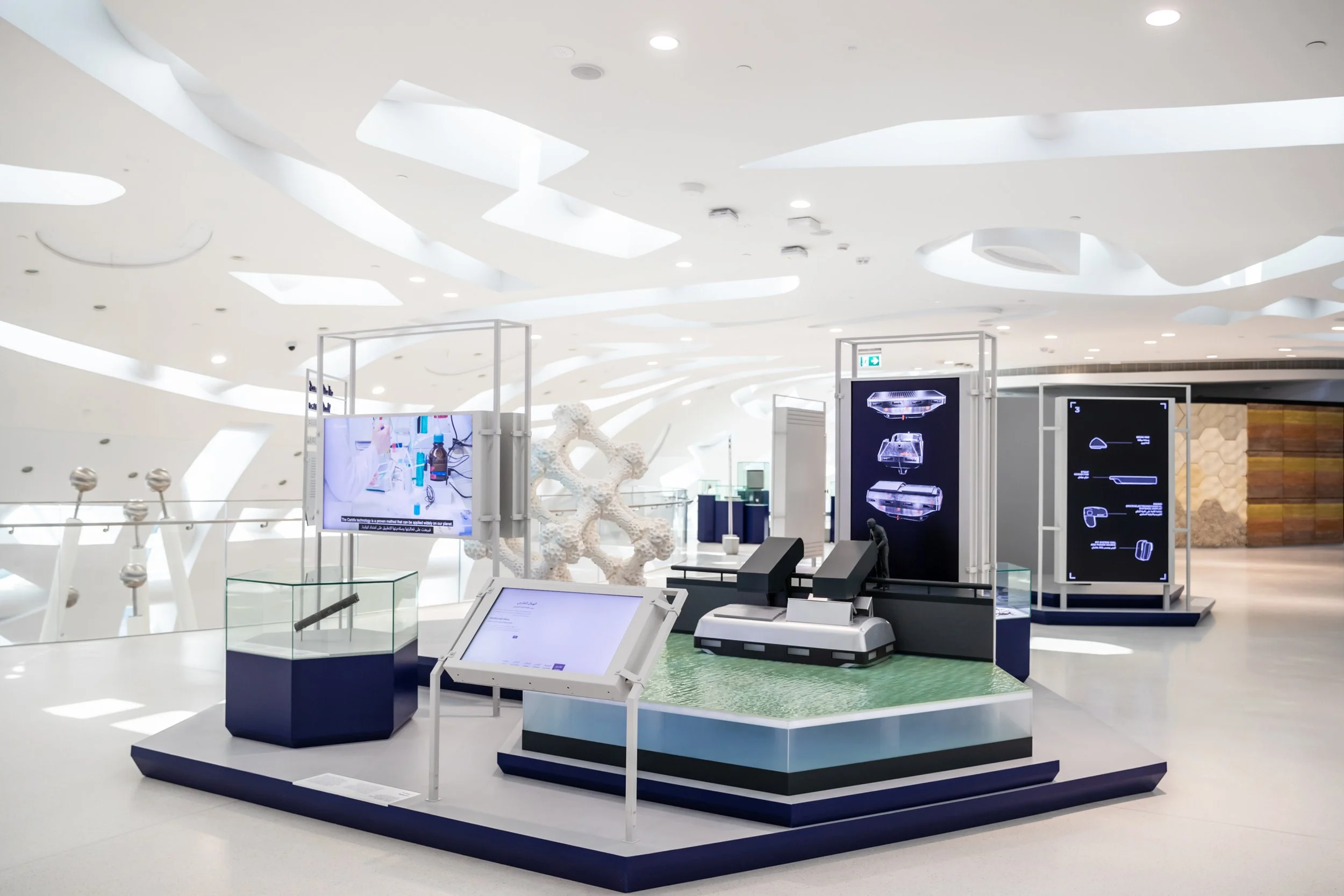


Level 2 - Tomorrow Today - photography courtesy of the Museum of the Future
Itineraries: Pairing the MOTF with the City
The museum sits between major draws: Emirates Towers, the Dubai World Trade Centre precinct, and a short metro ride from Burj Khalifa/Dubai Mall, making it easy to fold into a day of design and architecture. A recommended arc: morning slot at MOTF, metro to Burj Khalifa/Dubai Mall for lunch and galleries, then return after sunset for exterior shots of MOTF’s illuminated calligraphy.
Why It Belongs on Every Dubai Shortlist
Plenty of attractions promise “immersive” experiences; few connect spectacle to purpose as coherently as the Museum of the Future. By positioning visitors as participants rather than observers, it turns big‑picture themes: climate, space, AI, and wellbeing into lived, navigable storylines. For travellers, it offers both a sense of place (rooted in Arabic calligraphy and UAE ambition) and a sense of time(fast‑forwarded to 2071), making it a singular window into Dubai’s identity now and its projected self tomorrow.

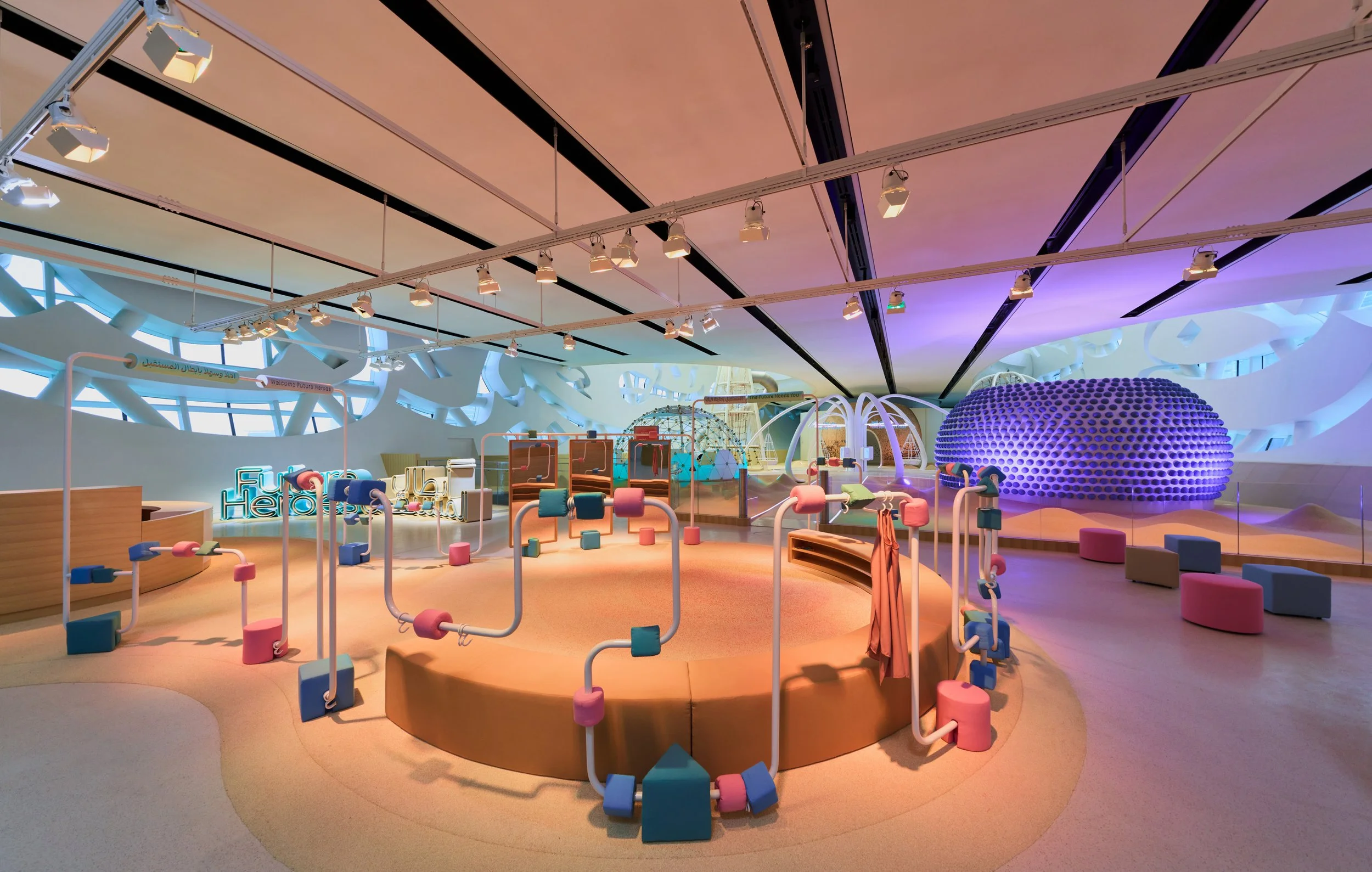


Level 1 - Future Heros - photography courtesy of the Museum of the Future
Visitor Essentials (At‑a‑Glance)
Hours: Typically 09:30–21:00 with time‑slotted entry; check your booking for last admission.
Tickets: Book ahead; under‑4s and People of Determination, plus one caregiver, enter free (ID required; collect onsite). Standard tickets are listed at AED 169 on the official site.
Getting there: Emirates Towers Metro (Red Line) via direct bridge; Buses 27/29/X22. Driving is possible, but parking is limited and paid.
Visit length: 2–3 hours minimum; allow 3–4 hours for a relaxed pace and photography.
Best time: Weekday mornings for low crowds; evenings for illuminated façade; shoulder seasons for comfortable outdoor time.
Families & access: All ages welcome; Future Heroes for kids; accessible routes and facilities throughout. Children 15 and under must be with an adult.
More From Dubai