Jumeirah Residences Al Maryah Island
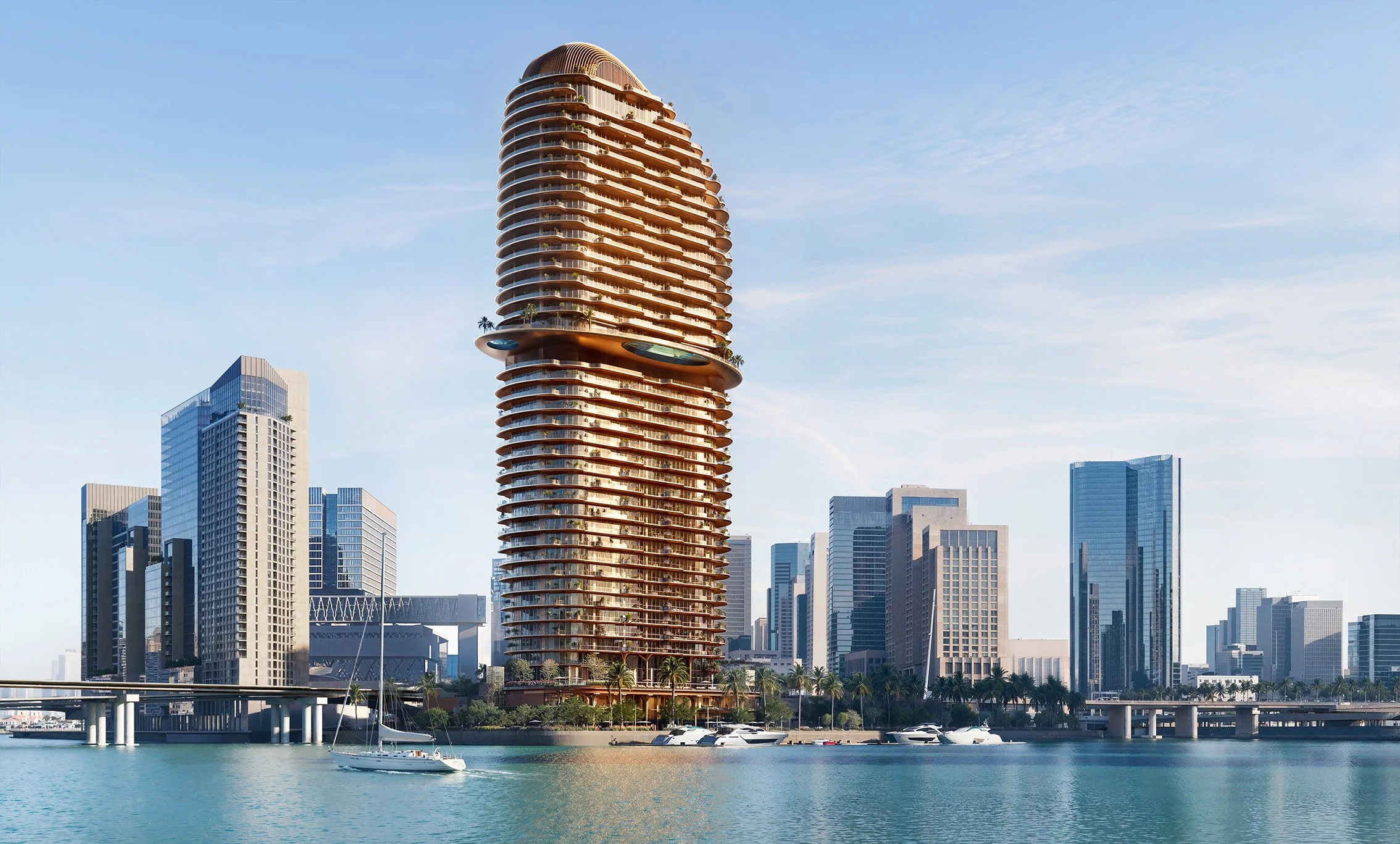
Set on the waterfront edge of Abu Dhabi’s Al Maryah Island, Jumeirah Residences Al Maryah Island introduces a sculptural residential form that redefines branded living within the capital’s financial district. Designed by the acclaimed architecture studio Killa Design, the tower continues the practice’s exploration of fluid geometries, atmospheric façades, and hospitality-led residential environments, positioning the project as both a landmark and a lifestyle statement.
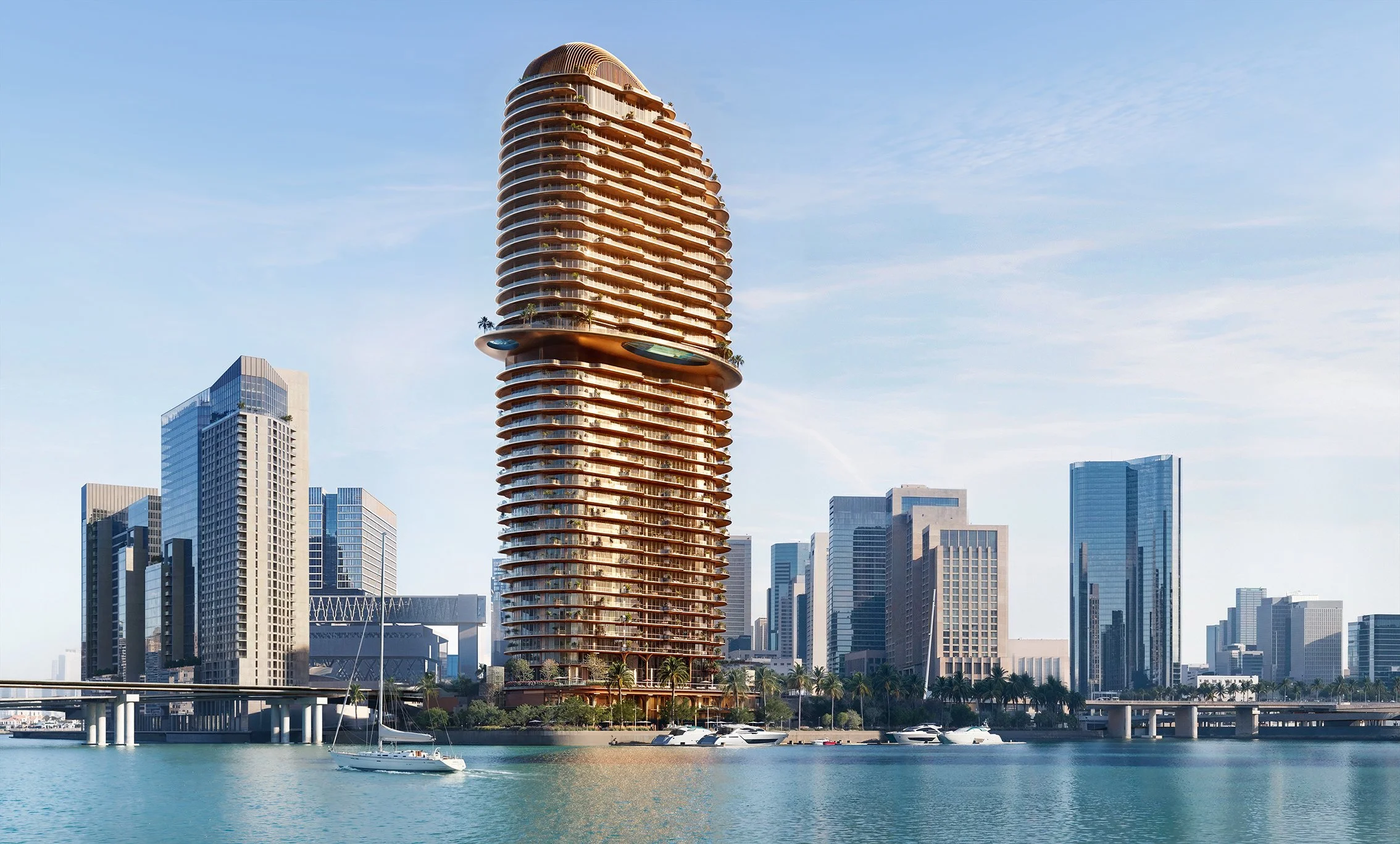
Rising approximately 186 metres, the development is conceived not simply as a residential building, but as an evolving object within the skyline; one shaped by light, movement, and the shifting conditions of its coastal context. Its amber-toned façade, articulated with sculpted balconies and continuous terraces, gives the impression of a form gradually carved by natural forces rather than constructed in isolation. This sense of architectural erosion and refinement places the project firmly within a new generation of expressive, environmentally responsive towers emerging across the UAE.
A sculptural response to Al Maryah Island
Al Maryah Island has rapidly evolved into one of Abu Dhabi’s most significant mixed-use districts, combining finance, hospitality, retail, and residential programmes within a tightly defined urban framework. Within this context, Jumeirah Residences introduces a more expressive architectural language that contrasts with the island’s predominantly rectilinear commercial architecture.
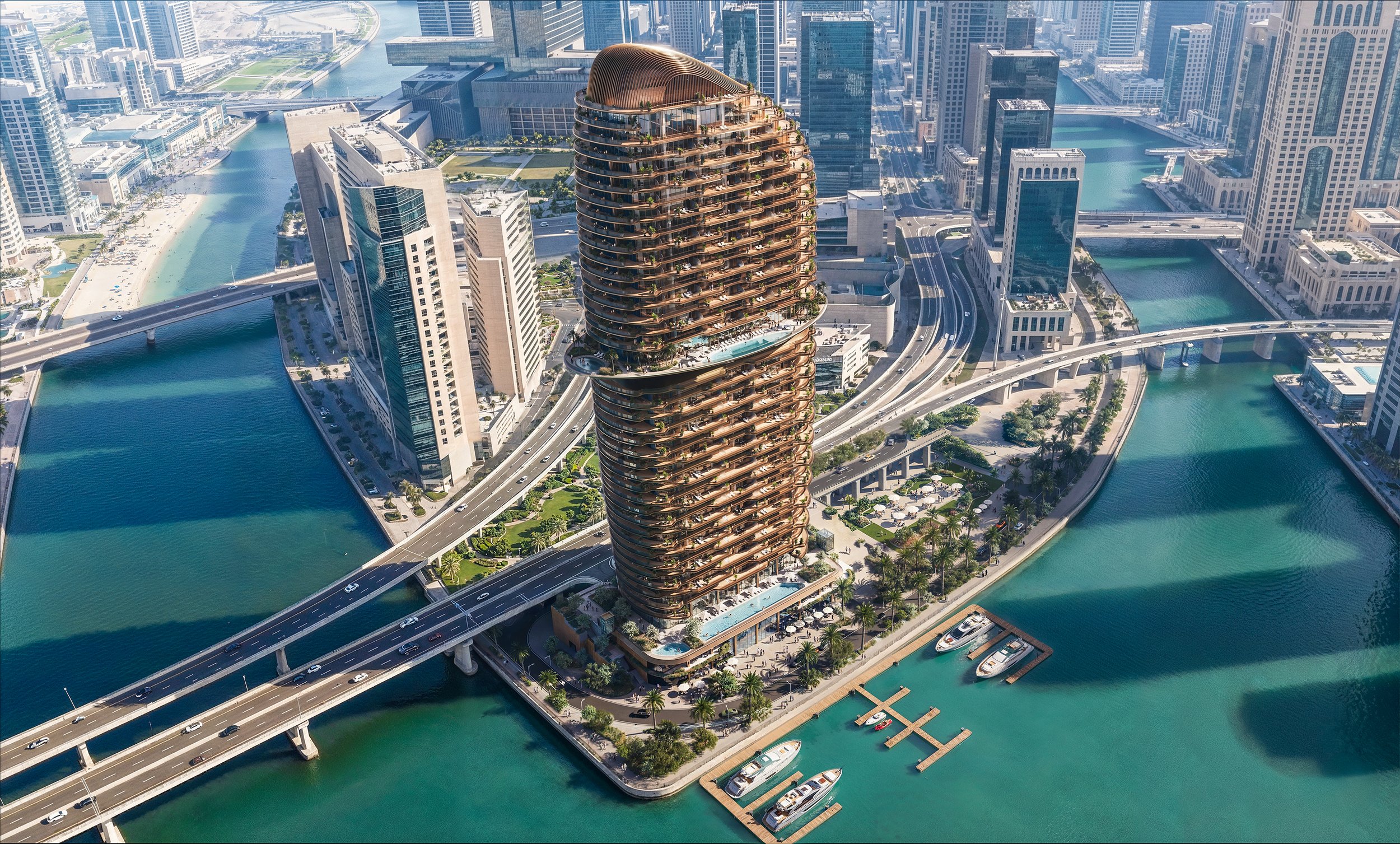
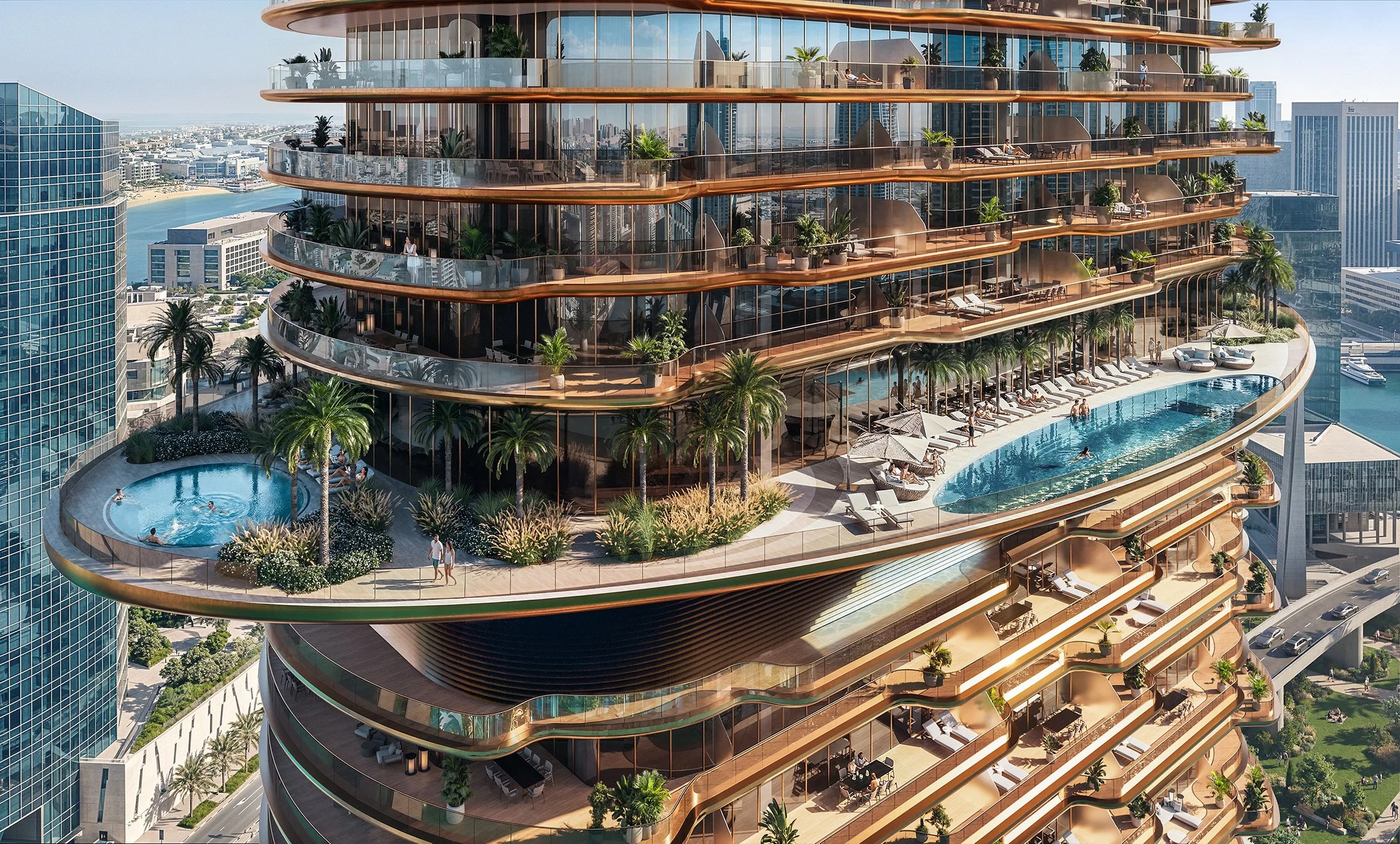
The tower’s design moves away from rigid vertical stacking, adopting a fluid composition in which each level subtly shifts and bends. The result is a façade that appears to ripple as it rises, with balconies extending outward like carved strata. This approach not only softens the building’s visual mass but also enhances its relationship with light, particularly the warm, low-angle sun that defines much of Abu Dhabi’s coastal atmosphere.
At the southern edge of the island, the tower is positioned as a visual marker, framing long-distance views across the canal and towards the wider city skyline. Its presence is less about dominance and more about articulation; an architectural punctuation point within a broader urban composition.
The language of light and materiality
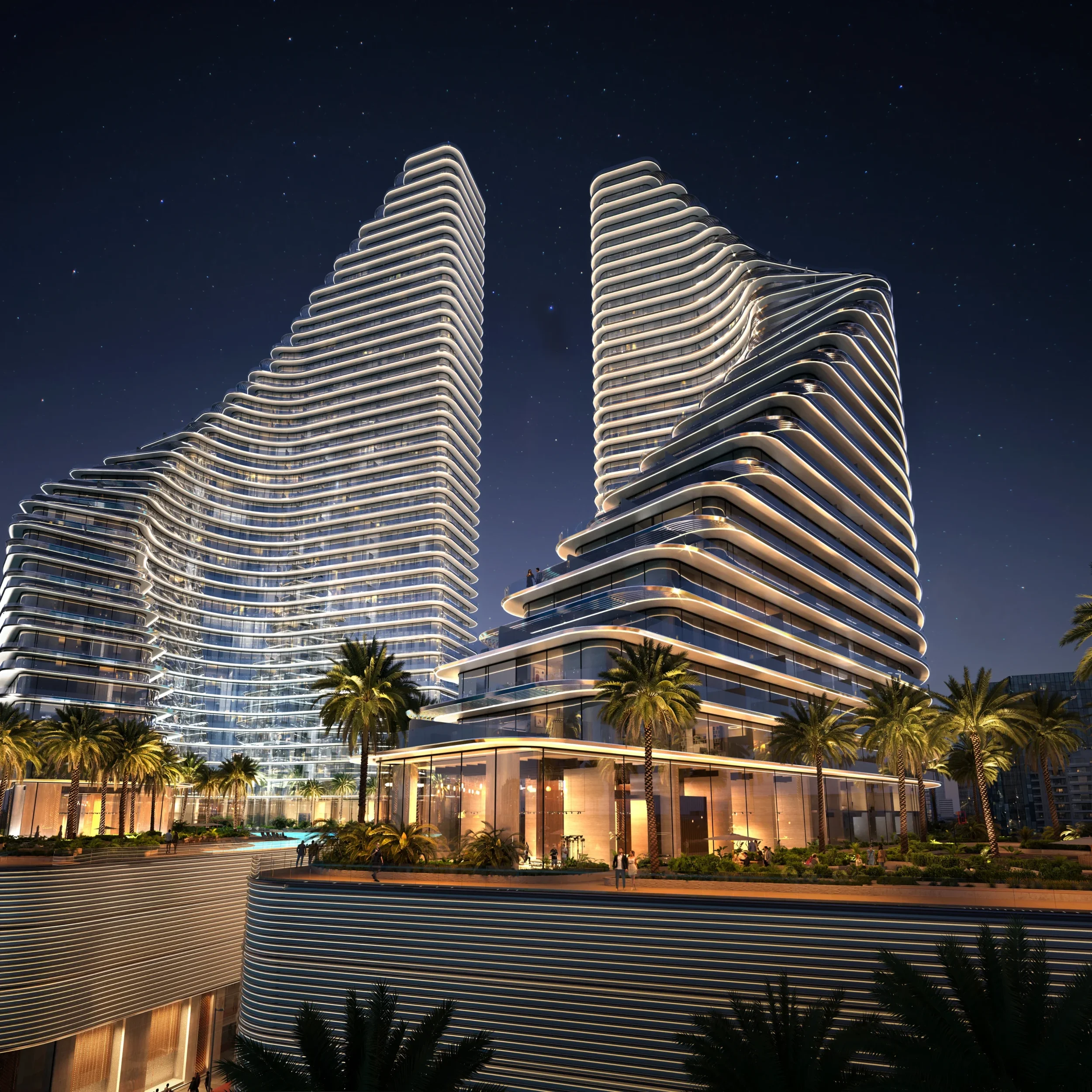
A defining characteristic of the project is its treatment of light as a material in itself. The façade’s warm metallic tones are designed to respond dynamically to changing daylight conditions, shifting from soft gold in the morning to deeper amber hues at sunset. At night, the building transforms once again, becoming a softly illuminated vertical presence on the waterfront.
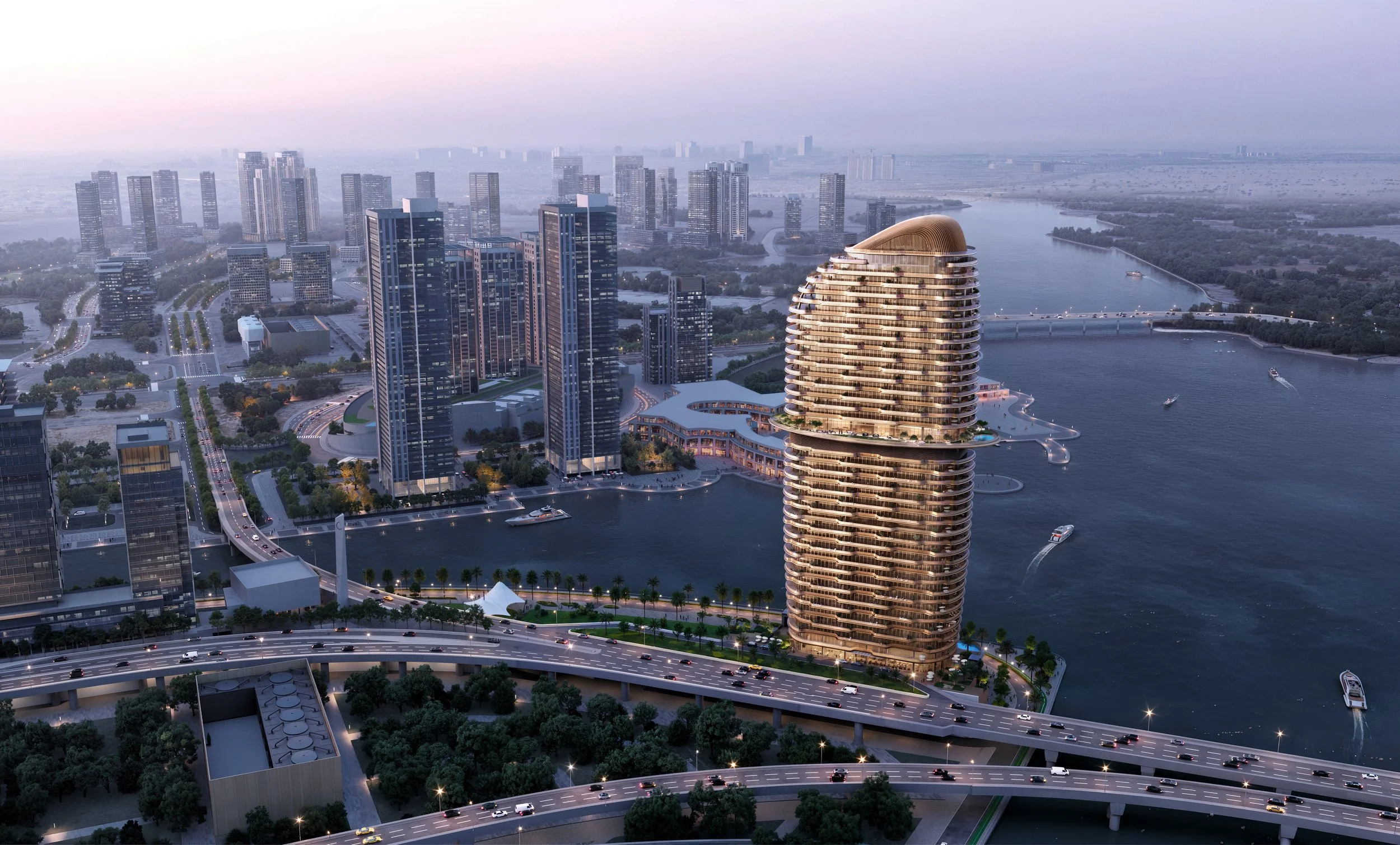
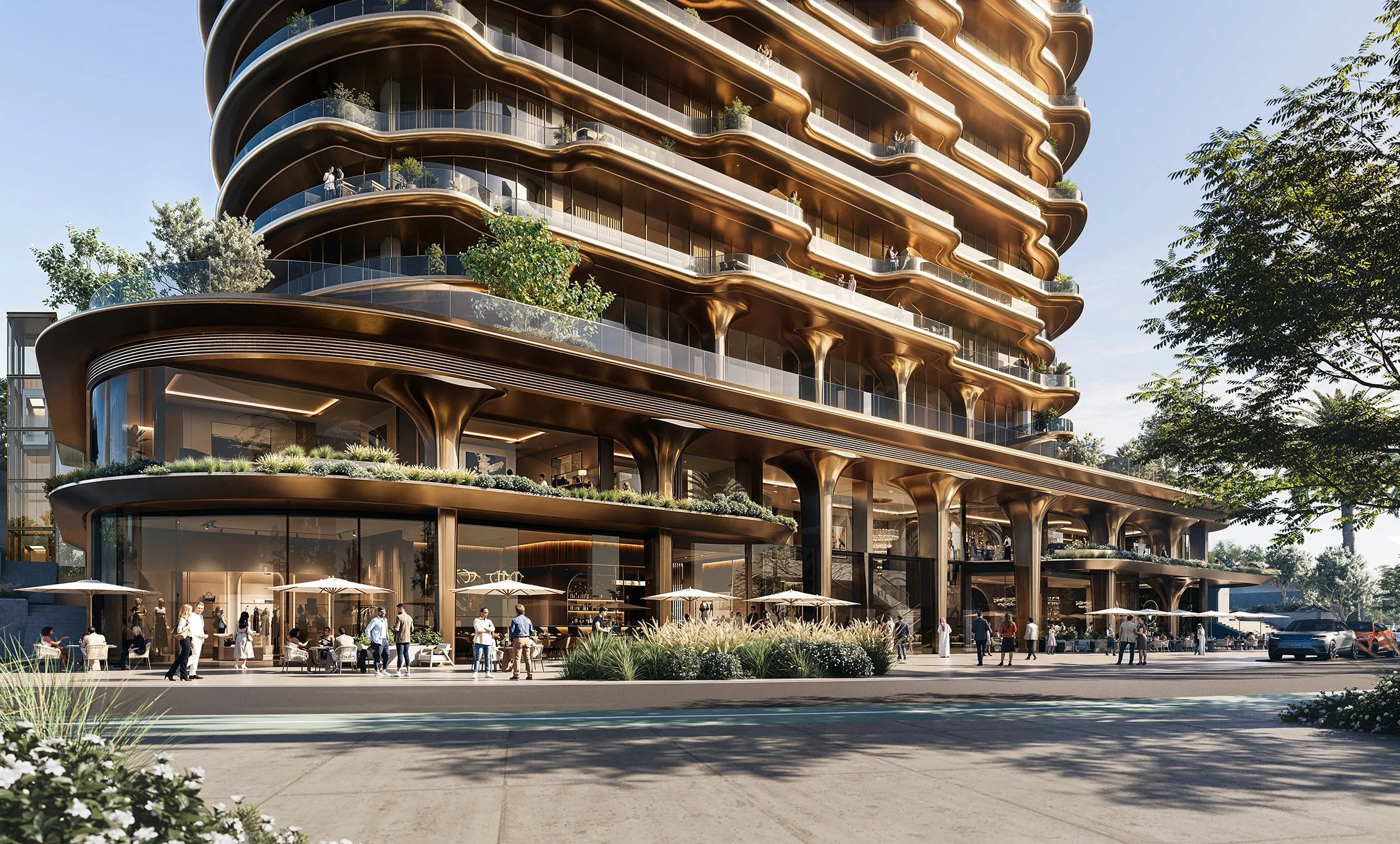
This chromatic sensitivity is reinforced by bronze-toned balcony detailing and recessed glazing, which together create depth and shadow across the elevation. The façade becomes a layered composition rather than a flat surface, enhancing its sculptural quality while improving solar control for the interiors.
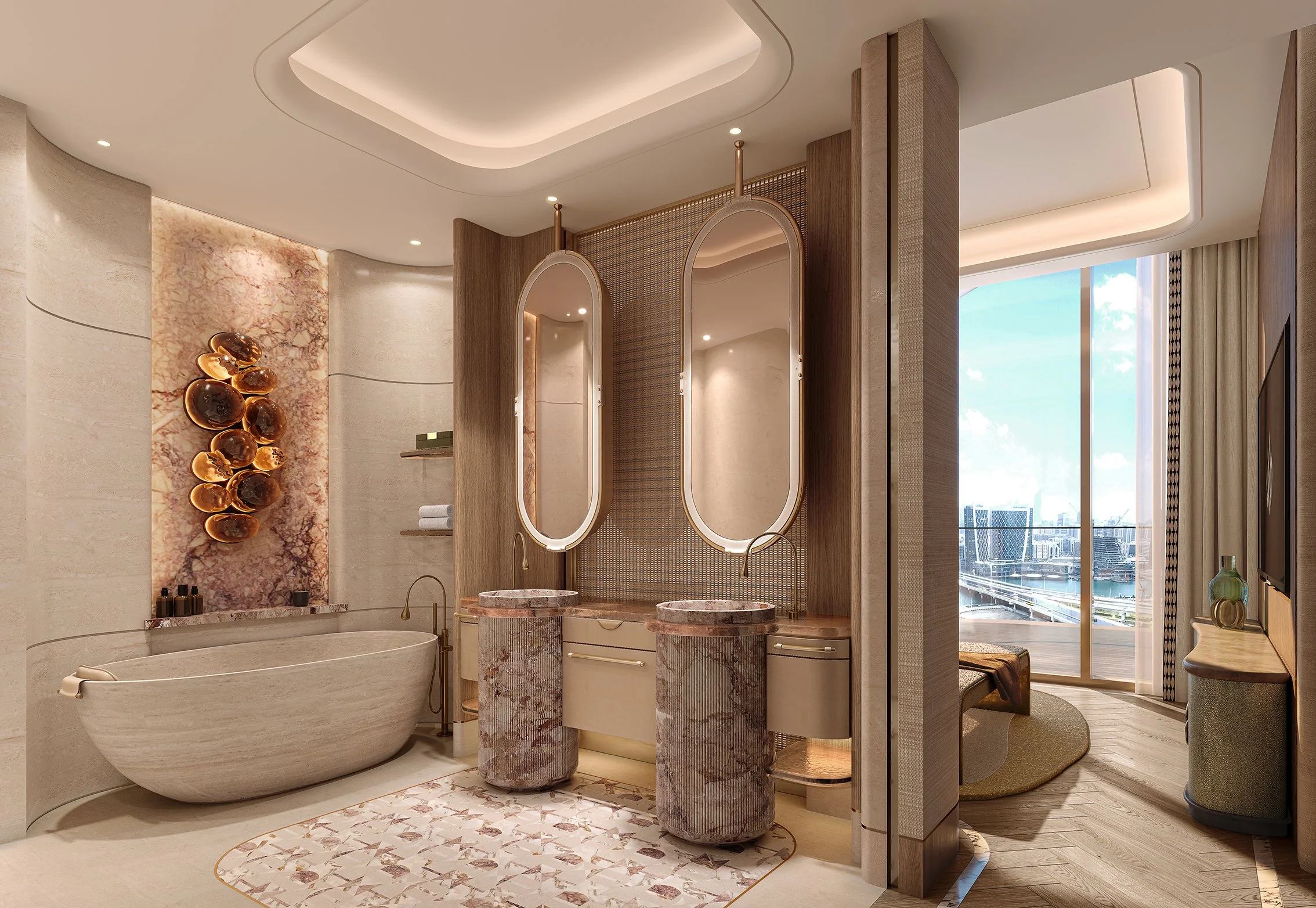
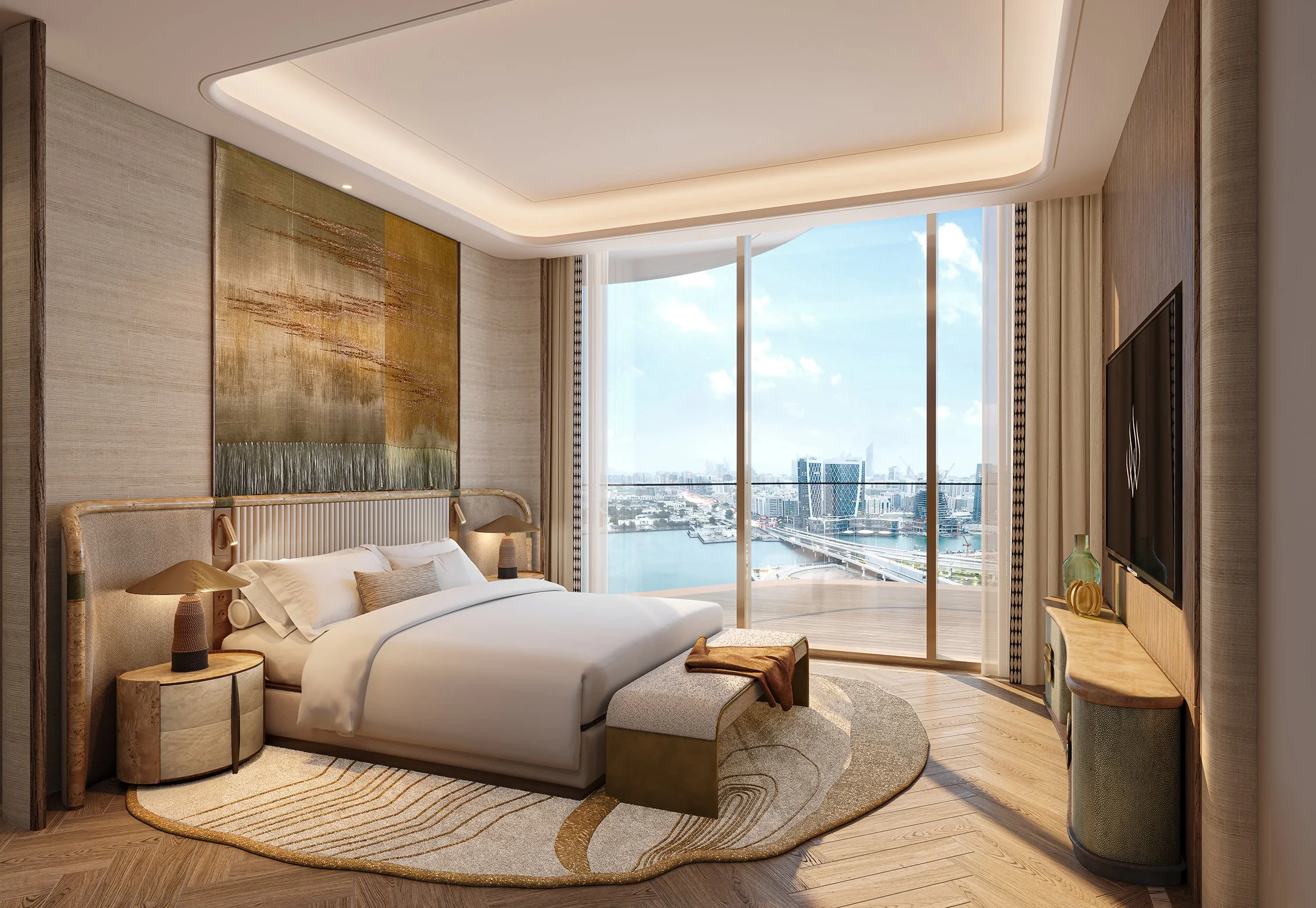
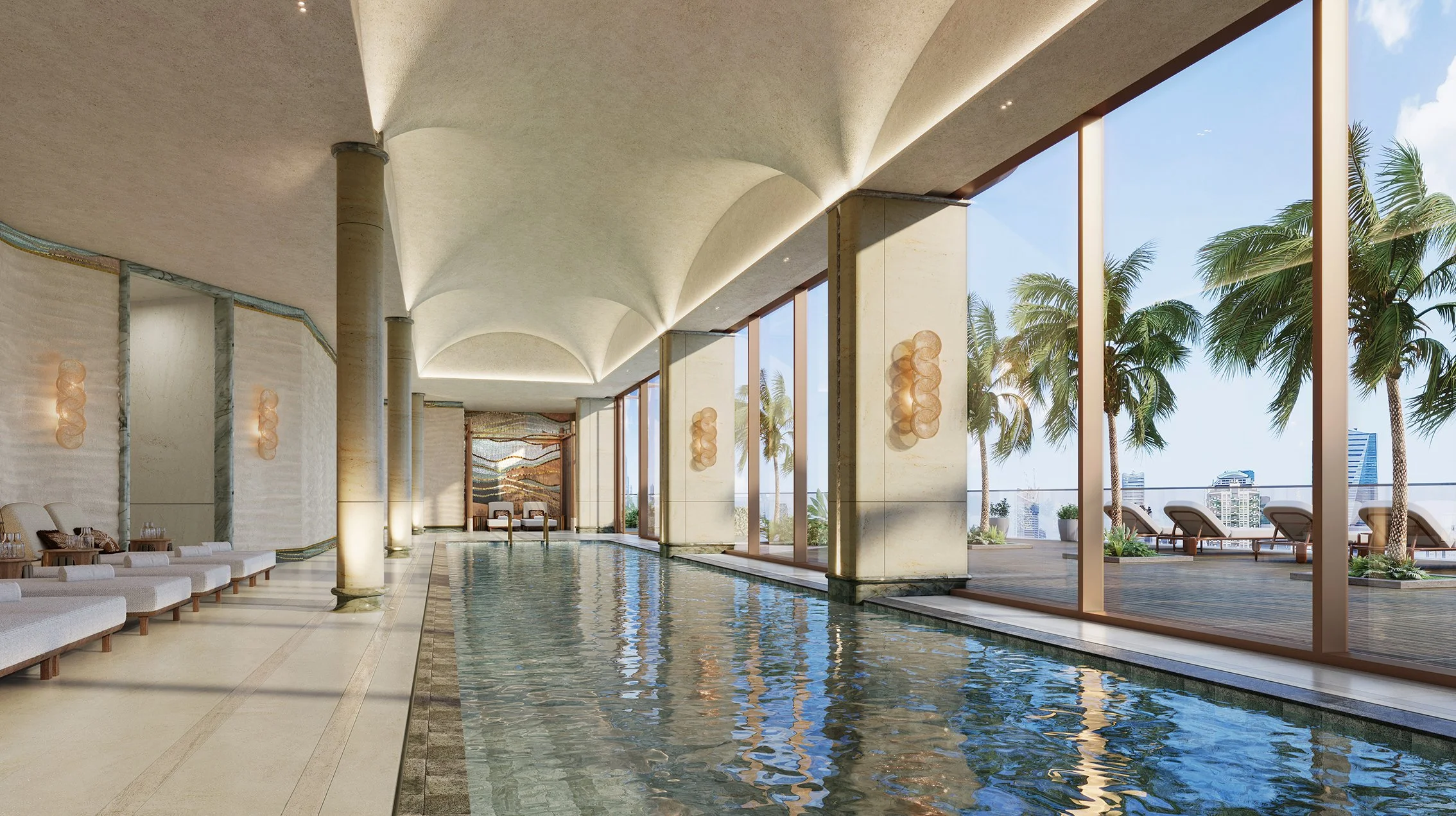
The material palette extends this narrative of warmth and tactility. Natural stone, timber accents, and muted finishes are expected throughout the residences, aligning with Jumeirah’s hospitality-driven design philosophy. Rather than overt opulence, the emphasis is placed on restraint, texture, and spatial calm.
Vertical living and the architecture of terraces
One of the most defining spatial strategies within Jumeirah Residences Al Maryah Island is its emphasis on outdoor extension. Terraces are not treated as secondary additions but as integral components of the architectural form. Each residence opens onto private outdoor spaces that extend the living environment into the building's vertical plane.
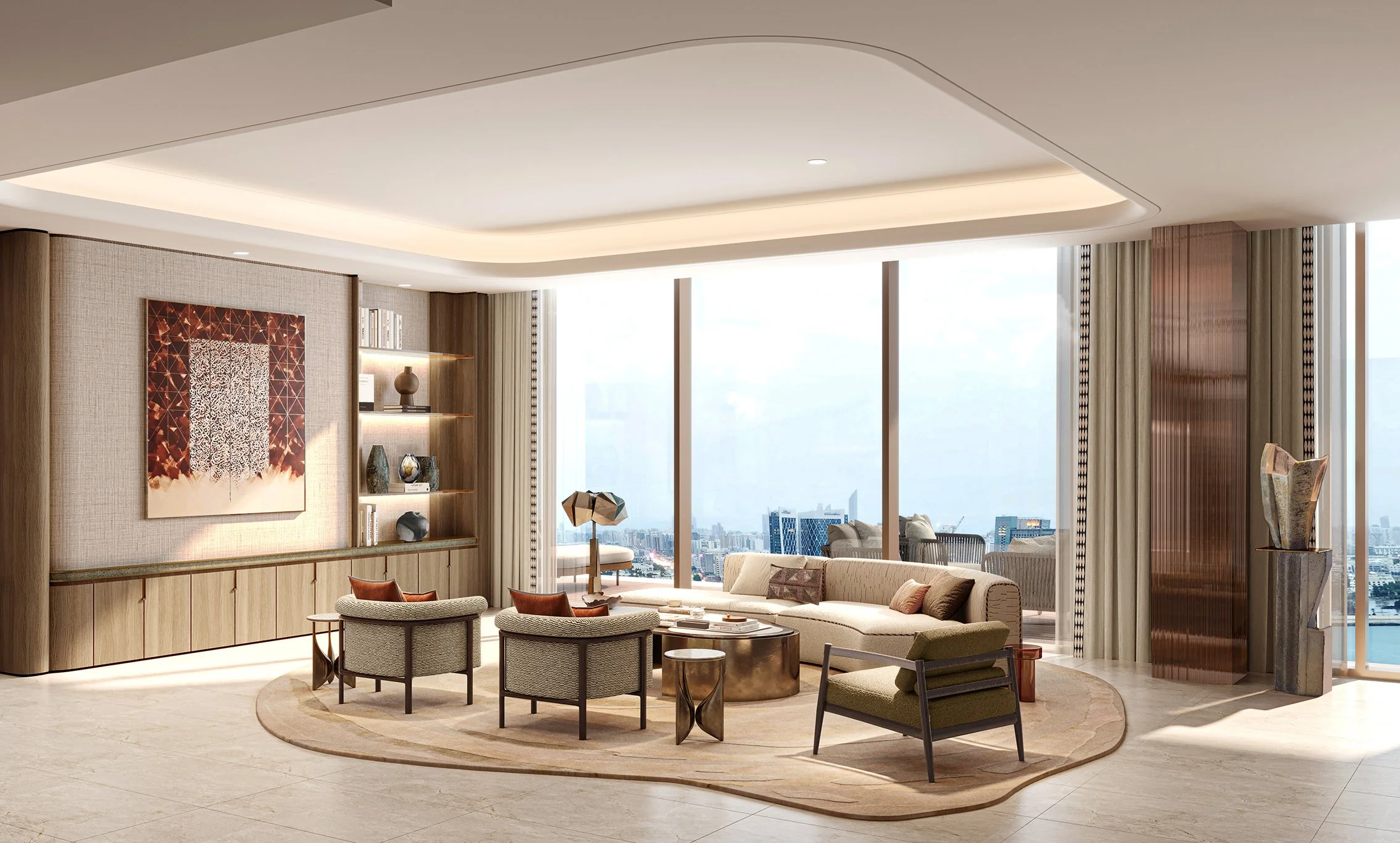
This layering of indoor and outdoor space creates a sense of domestic continuity rarely achieved in high-rise residential design. Floor-to-ceiling glazing dissolves the boundary between interior and exterior, allowing daylight to penetrate deep into the living spaces while maintaining uninterrupted views across the water and city beyond.
Sky gardens and elevated landscape elements further enhance this vertical ecology, introducing moments of greenery and pause within the tower’s ascent. These interventions not only soften the architectural mass but also reinforce the idea of a vertical neighbourhood rather than a singular residential block.
A hospitality-led residential experience
As a branded residence under the Jumeirah name, the development integrates hospitality principles into its architectural framework. The result is a residential environment that extends beyond private apartments into a curated sequence of shared spaces and services.
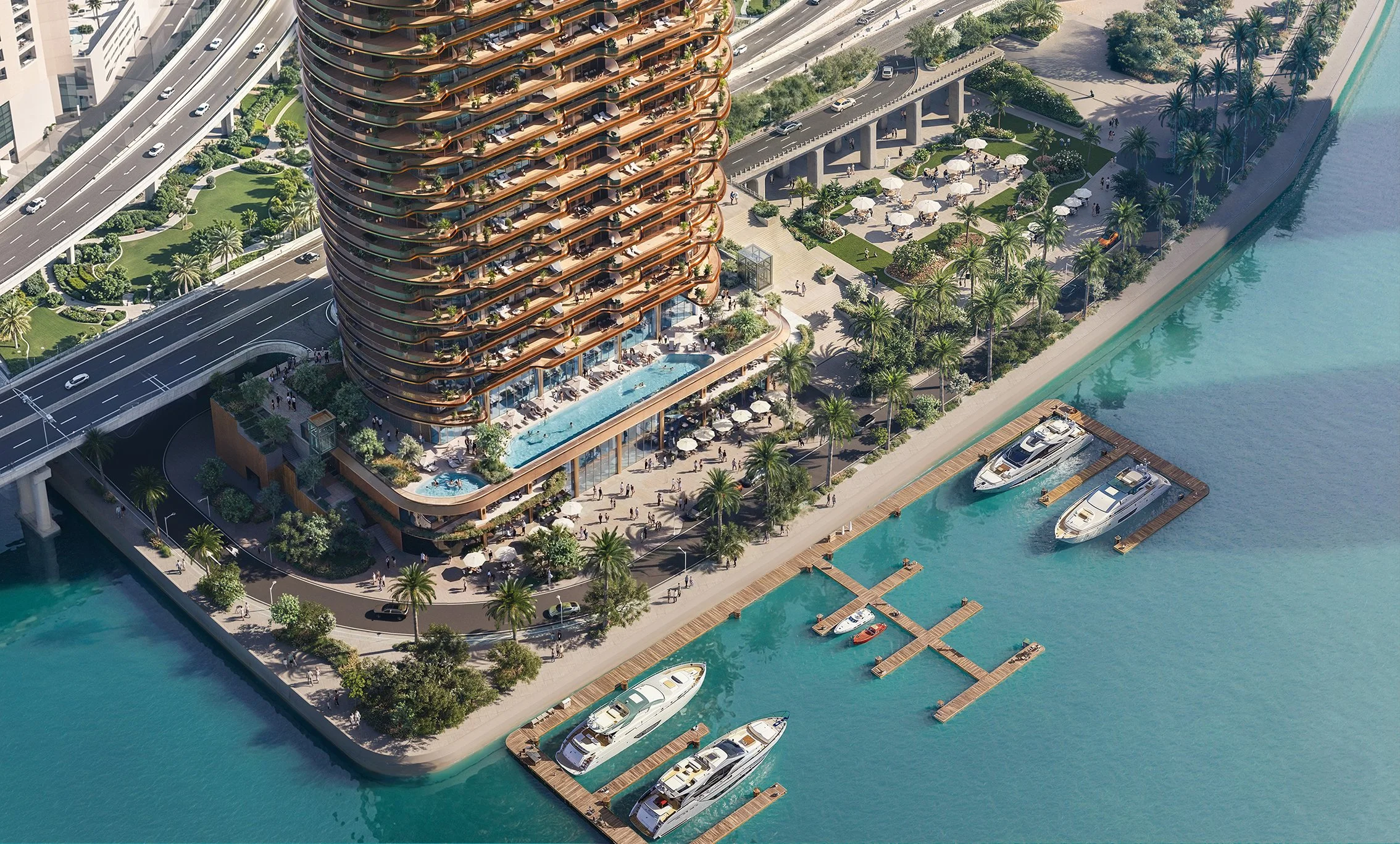
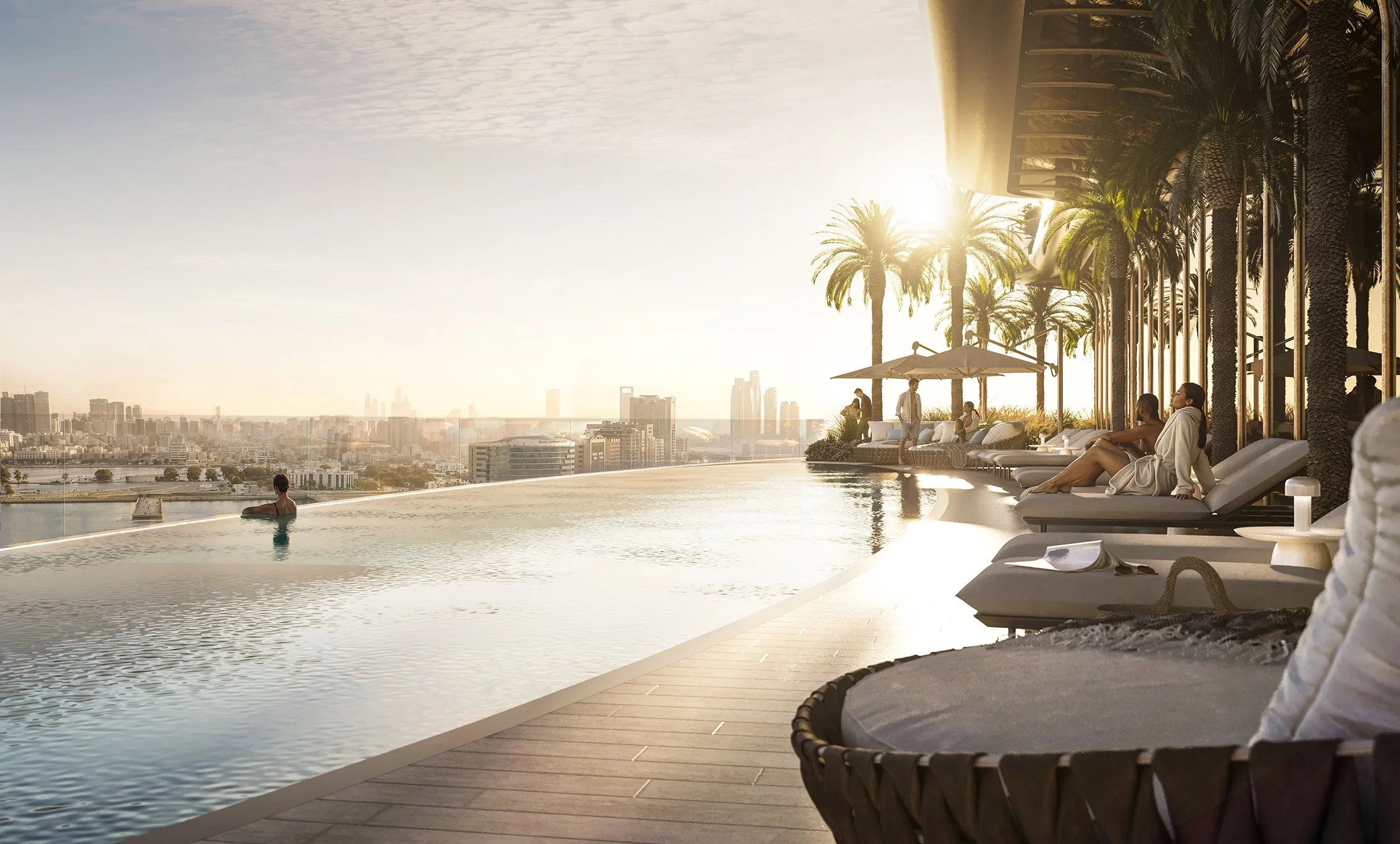
The arrival experience is designed as a sequence of transitions: from the waterfront promenade to the grand lobby and onwards into the elevated communal areas. Within the building, residents have access to a range of lifestyle amenities, including wellness facilities, fitness spaces, lounges, and private social spaces.
At the heart of the scheme is a focus on experience-led living. Rather than prioritising density, the design favours spatial generosity and circulation. Corridors, lobbies, and shared areas are conceived as architectural moments in their own right, reflecting the standards of luxury hospitality for which Jumeirah is known globally.
An evolving typology for Abu Dhabi
Jumeirah Residences Al Maryah Island reflects a broader shift in Abu Dhabi’s residential landscape, where architecture is increasingly defined by identity, brand collaboration, and experiential design. The integration of Killa Design’s sculptural language with Jumeirah’s hospitality ethos results in a hybrid typology that sits between a residential tower, a hotel, and an urban landmark.
In a district shaped by finance and commerce, the project introduces a counterpoint rooted in atmosphere, material sensitivity, and lifestyle-driven design. It is not simply a place to live, but a building designed to be experienced, both from within and as part of the wider city skyline.
As Al Maryah Island continues to evolve, this project signals a move towards more expressive residential architecture in Abu Dhabi, where form, light, and hospitality converge to define a new urban language.
More Stories