Louvre Abu Dhabi: Jean Nouvel’s Floating Dome and the Architecture of Light
Certain buildings immediately alter the rhythm of a city. Structures so ambitious in their vision that they become more than architecture alone; they become symbols of cultural identity, ambition and place. In Abu Dhabi, the Louvre Abu Dhabi stands as one of those rare projects. Rising from the waters of Saadiyat Island like a contemporary mirage, the museum feels at once monumental and impossibly weightless, a floating city beneath a silver rain of light.
Designed by Pritzker Prize-winning architect Jean Nouvel, the Louvre Abu Dhabi is not simply a museum for displaying art. It is an architectural experience shaped by shadow, reflection, geometry and atmosphere. Since opening in 2017, the institution has become one of the defining cultural landmarks of the UAE, drawing visitors not only for its extraordinary collection but also for the emotional power of its architecture.
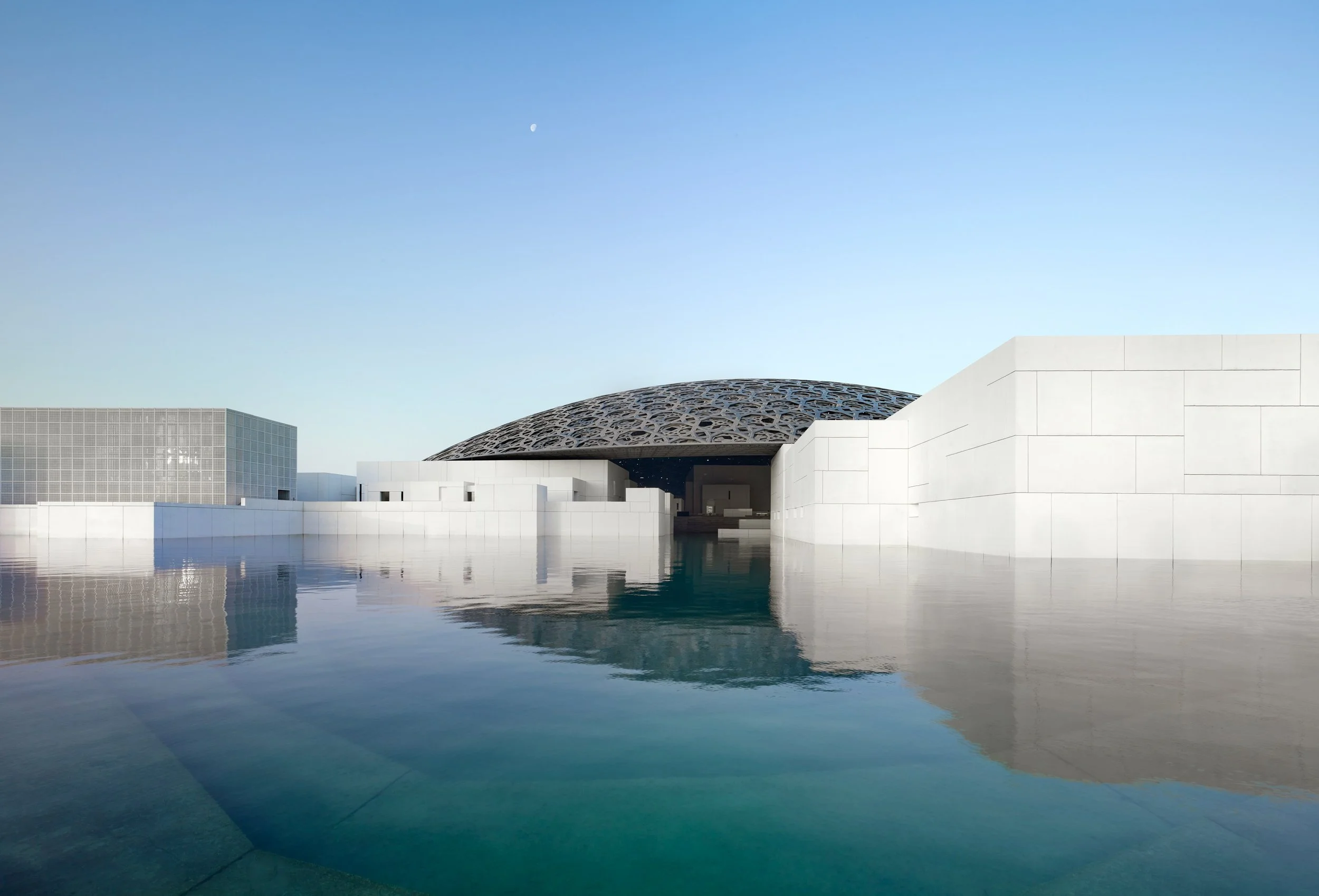
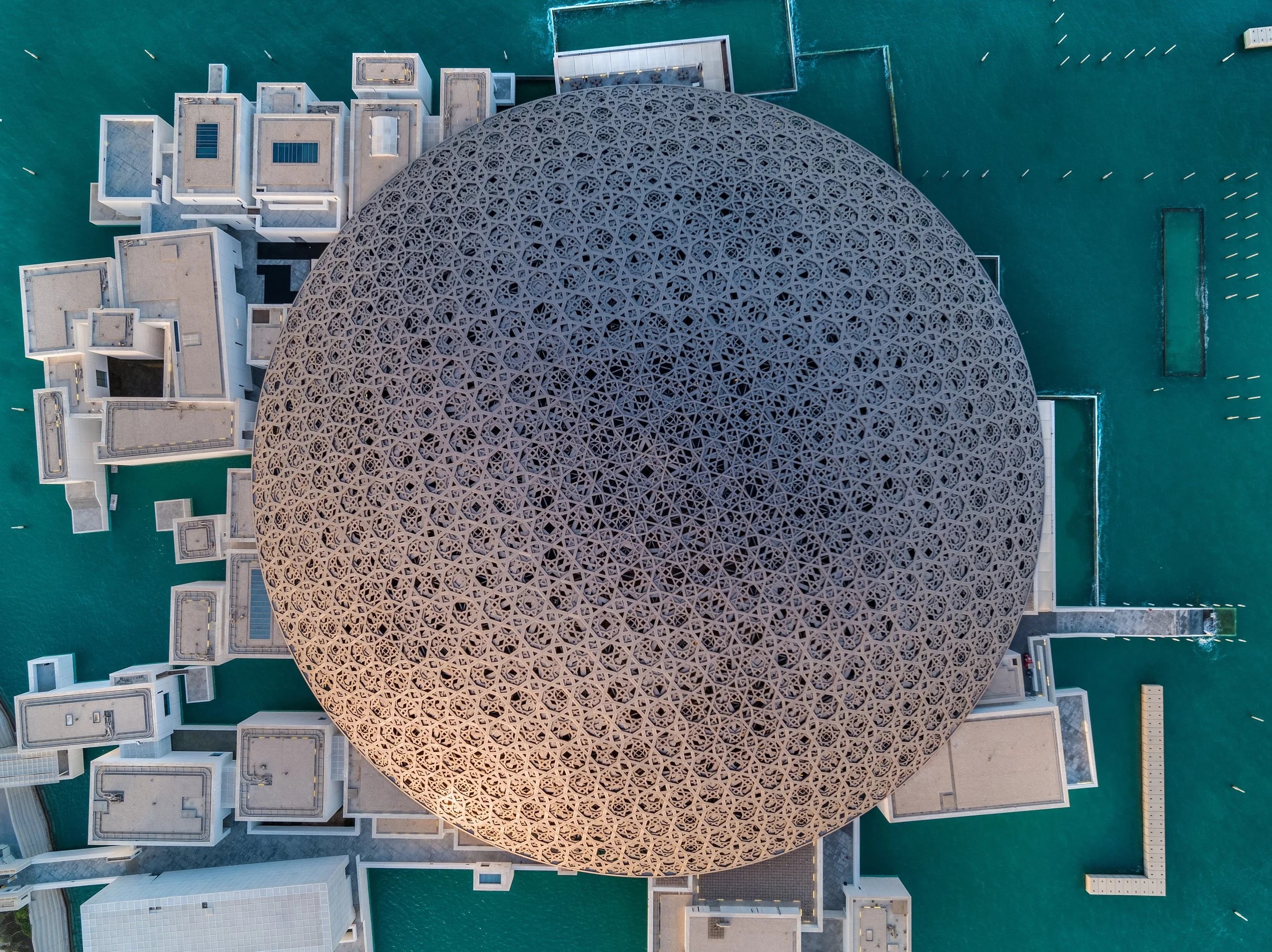
Approaching the museum from the coastline, the vast dome appears almost suspended above the water. Measuring 180 metres in diameter and weighing approximately 7,500 tonnes, the canopy is one of the most ambitious engineering achievements in contemporary architecture. Yet despite its scale, the structure never feels overwhelming. Instead, it hovers with a surprising softness, casting intricate patterns of filtered sunlight onto the galleries, courtyards and pathways below.
Nouvel’s inspiration came from traditional Arab medinas and the layered palm fronds historically used to provide shade throughout the region. Rather than creating a single enclosed structure, the architect envisioned the museum as a series of white cubic forms arranged like a contemporary settlement beneath the protective dome. The result is an architectural language deeply connected to the Middle East while remaining entirely modern in its execution.
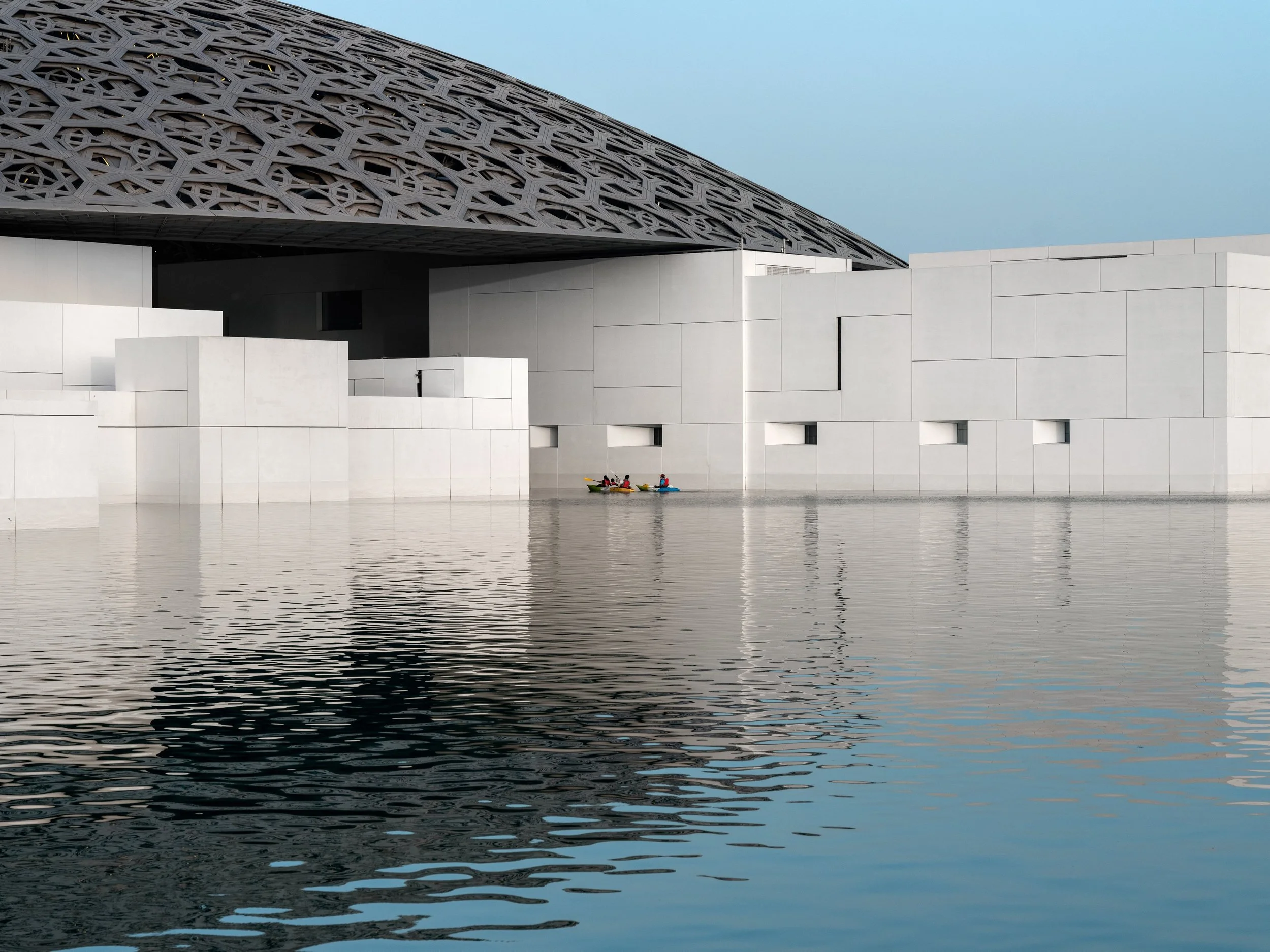
Walking through the museum feels remarkably cinematic. Water surrounds the complex on all sides, blurring the boundaries between land and sea. Narrow passages open into expansive plazas. Reflections shimmer across pale concrete surfaces. Light moves constantly throughout the day, transforming every corridor and gallery into a living composition.
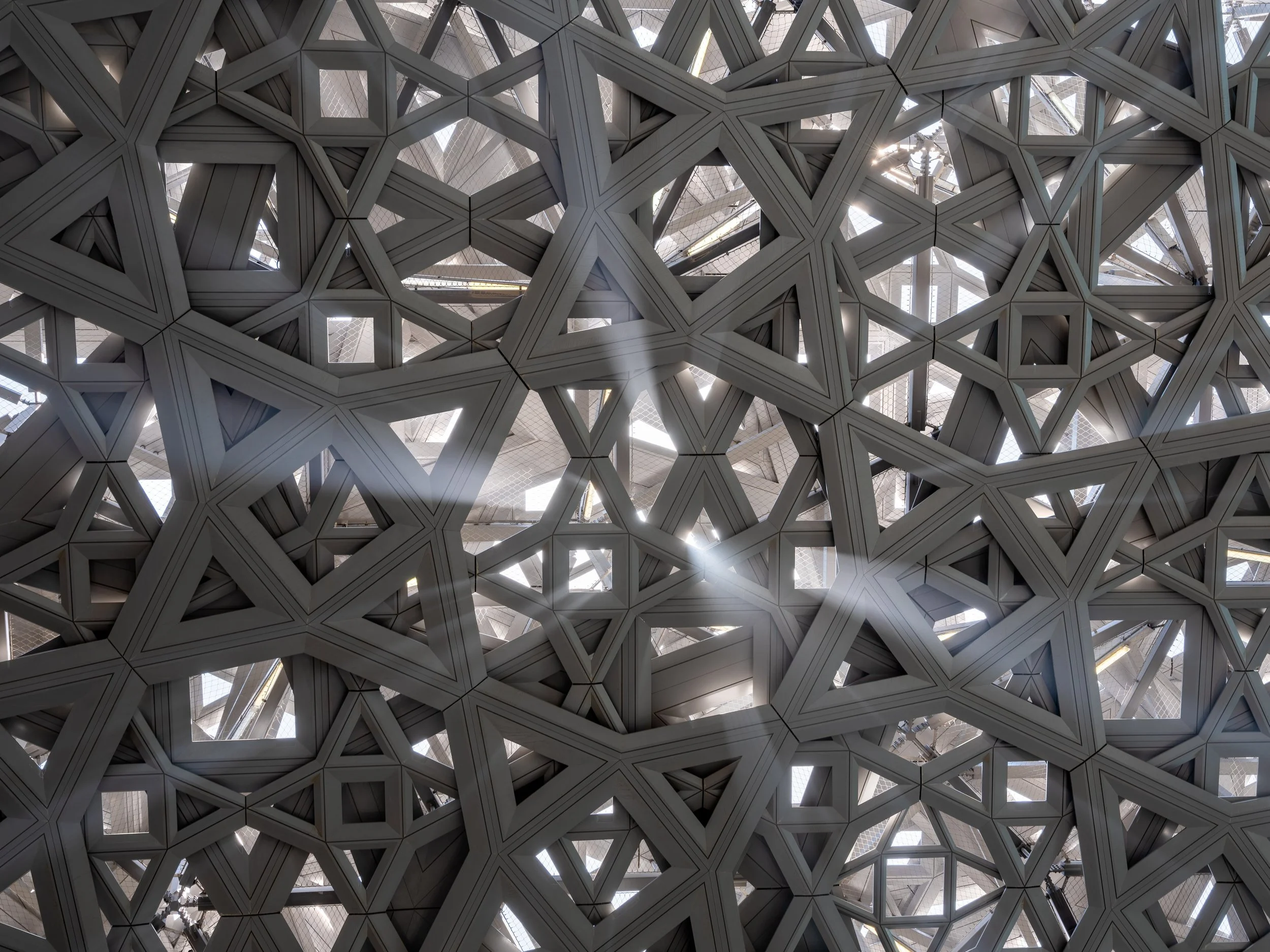
At the heart of the project lies the museum’s most celebrated feature: the “rain of light.” Created through eight superimposed layers of geometric steel latticework, the dome filters sunlight into thousands of shifting beams that dance across the surfaces below. The effect is mesmerising. During the early morning and late afternoon, the filtered light becomes almost ethereal, creating an atmosphere that feels spiritual rather than institutional.
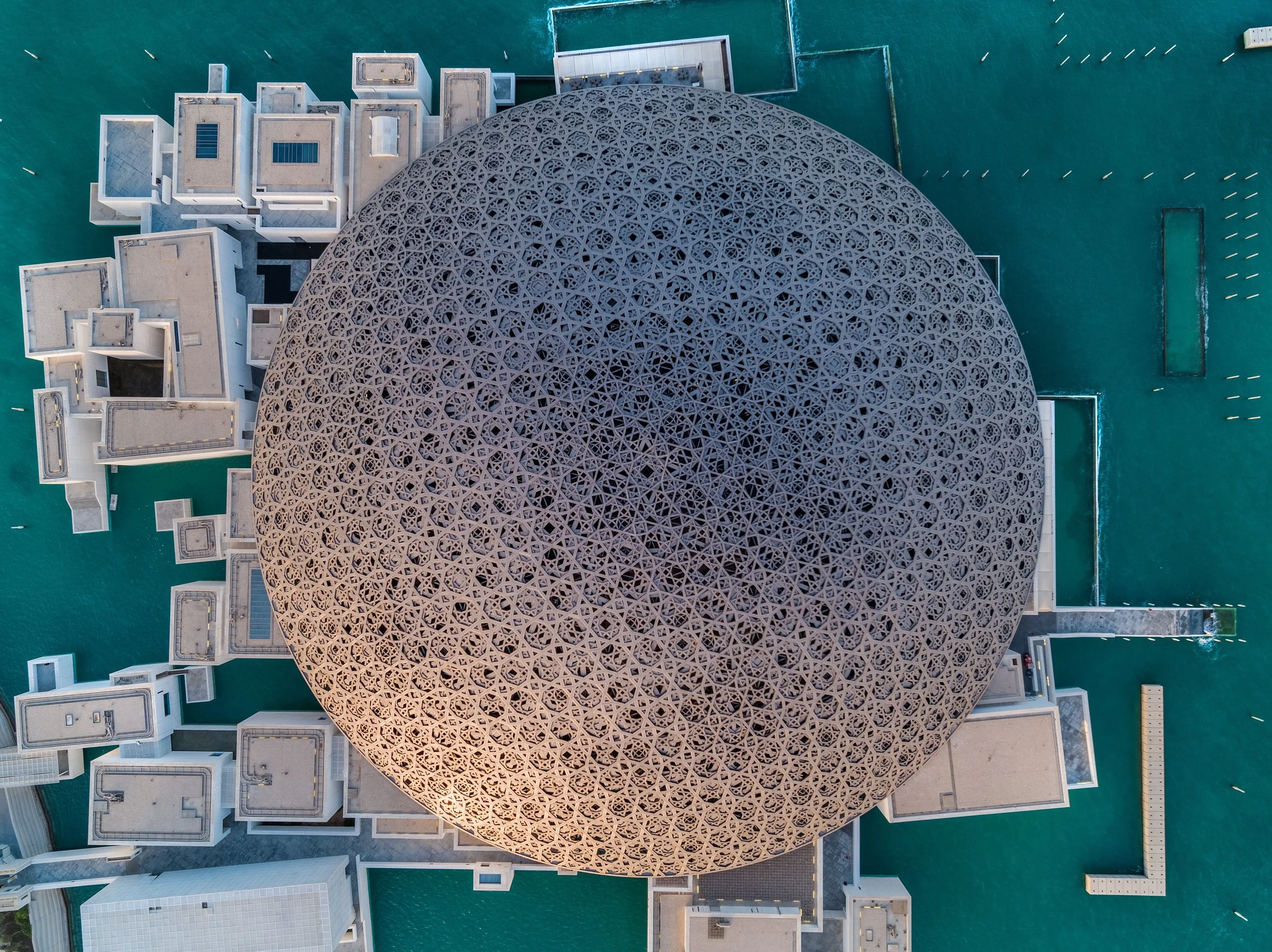
This relationship between architecture and light is central to Nouvel’s vision. In many museums, galleries are intentionally neutral, designed to disappear behind the art. At Louvre Abu Dhabi, the architecture actively participates in the visitor experience. Shadow becomes material. Sunlight becomes texture. The building itself becomes a constantly changing installation.
What makes the project especially compelling is how seamlessly it responds to Abu Dhabi's climate. The dome is not purely symbolic or aesthetic; it also functions as an environmental device, helping reduce solar gain and creating naturally cooler outdoor spaces beneath its canopy. Combined with the surrounding water and carefully designed airflow, the architecture creates a microclimate that allows visitors to move comfortably between indoor and outdoor environments.
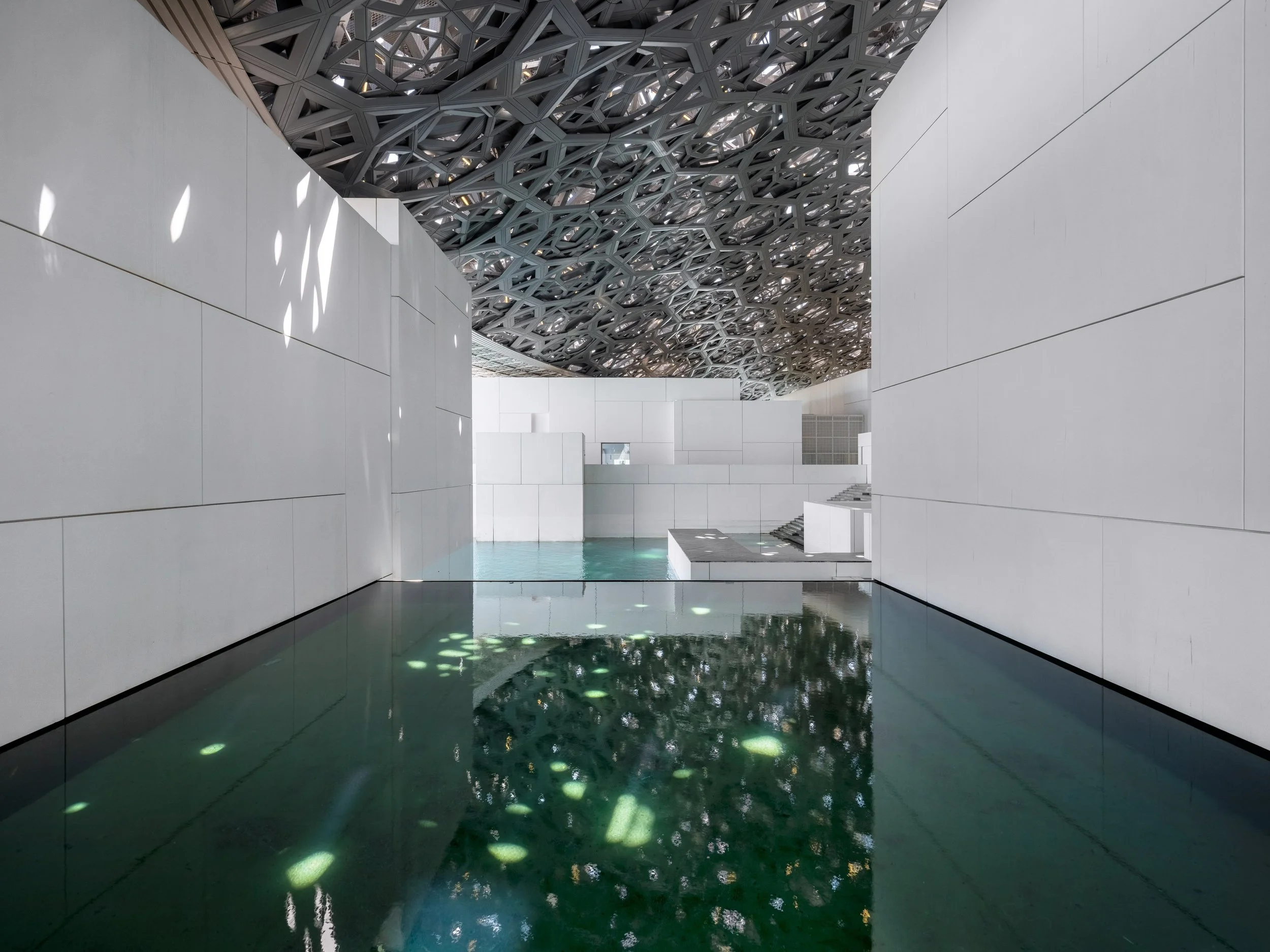
The museum’s setting on Saadiyat Island further enhances this sense of calm. Unlike the dense urban intensity of downtown Abu Dhabi or Dubai, the Louvre sits within an expansive cultural district designed to position the emirate as a global centre for art, architecture and intellectual exchange. The openness of the landscape allows the museum’s silhouette to remain uninterrupted against the sky, giving the dome an almost celestial presence at sunset.
Materiality also plays an essential role in the museum’s emotional impact. The pale concrete walls possess a tactile softness that contrasts beautifully with the shimmering metallic dome above. Stone walkways reflect sunlight during the day, then cool to muted tones at dusk. Water, meanwhile, acts as a mirror throughout the complex, amplifying both the architecture and the ever-changing desert light.
Inside the galleries, the architectural restraint allows the artworks to breathe while still maintaining a powerful sense of place. Ceiling heights shift subtly between rooms. Openings frame glimpses of the sea. Transitional spaces create moments of pause and reflection between exhibitions. Rather than functioning as a sequence of isolated white boxes, the museum unfolds gradually, balancing intimacy with monumentality.
The project also represents a significant moment in the cultural evolution of the UAE. Louvre Abu Dhabi is not merely an imported institution carrying a globally recognised name. Instead, it reflects the country’s wider ambition to position culture, creativity and education at the centre of its future identity. The architecture embodies this aspiration beautifully: deeply rooted in regional references while confidently global in its outlook.
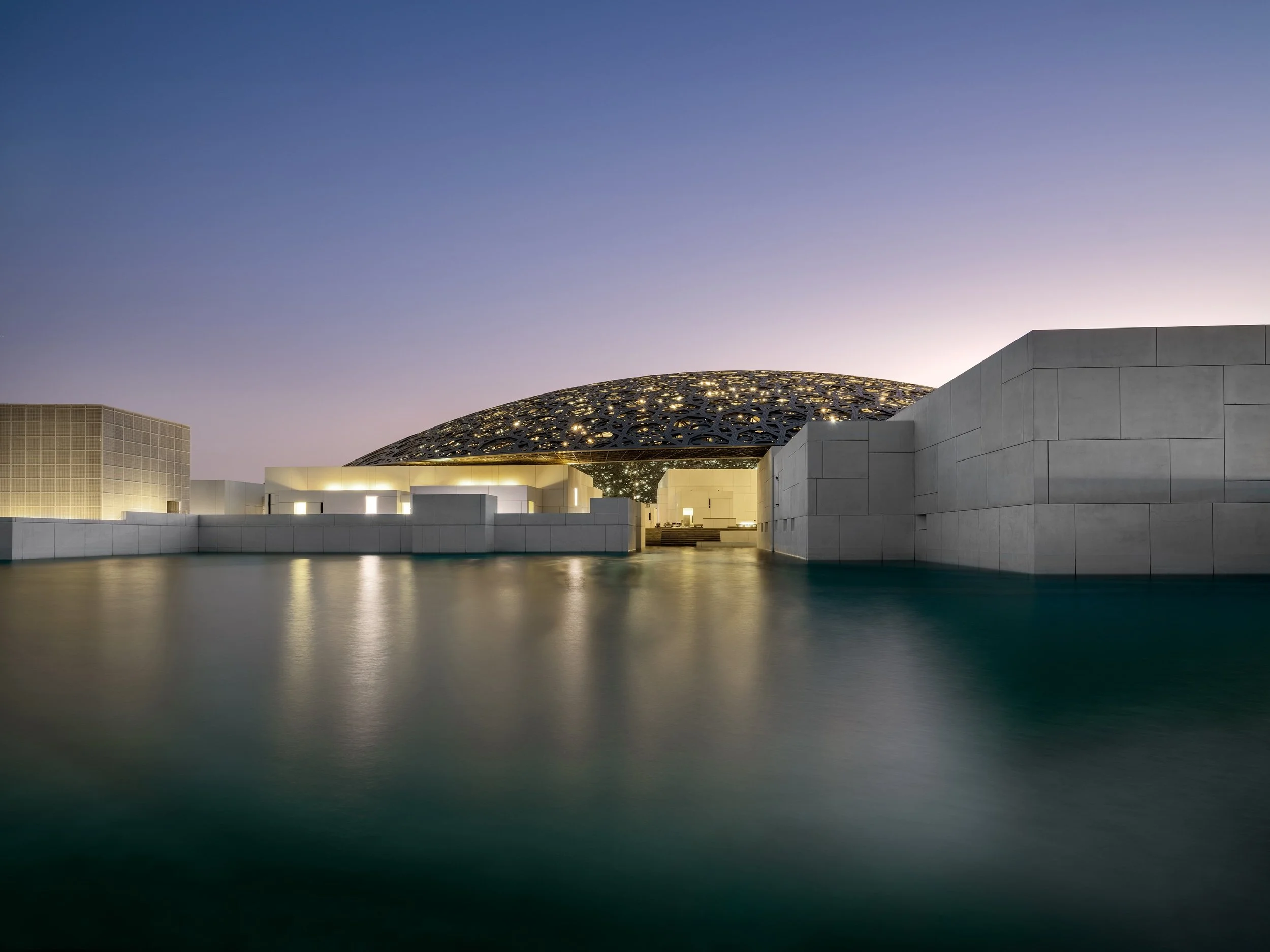
Nearly a decade after opening, the museum continues to feel visionary. In an era when architecture often competes for attention through spectacle alone, Louvre Abu Dhabi succeeds through its emotional intelligence. It understands how light can shape mood, how silence can elevate space and how architecture can create memory long after visitors leave.
As evening falls across Saadiyat Island, the dome begins to glow softly against the darkening sky. Reflections ripple across the surrounding water, and the geometric canopy takes on an almost celestial appearance. In these moments, Louvre Abu Dhabi feels less like a building and more like an atmosphere; a floating world of light, shadow and cultural storytelling at the edge of the Arabian Gulf.
More Stories