Rialto at Jumeirah Marsa Al Arab
Located within the newly unveiled Jumeirah Marsa Al Arab, Rialto Restaurant emerges as a sophisticated celebration of Italian culinary heritage, interpreted through a richly layered interior that balances cinematic drama with refined restraint. More than a destination for dining alone, Rialto is conceived as an immersive experience, one where architecture, materiality, lighting, and atmosphere work in harmony to transport guests into a distinctly Italian worldview, filtered through the lens of contemporary luxury hospitality.
Set against the architectural grandeur of Jumeirah Marsa Al Arab, one of Dubai’s most anticipated hotel openings, Rialto plays a key role in defining the property’s cultural and experiential offering. The restaurant draws inspiration from Italy’s golden age of cinema and design, referencing mid-century elegance, theatrical interiors, and the social ritual of dining as performance. From the moment guests arrive, Rialto establishes itself as a space designed not merely to be seen, but to be felt.
A Grand Arrival Inspired by Italian Theatre
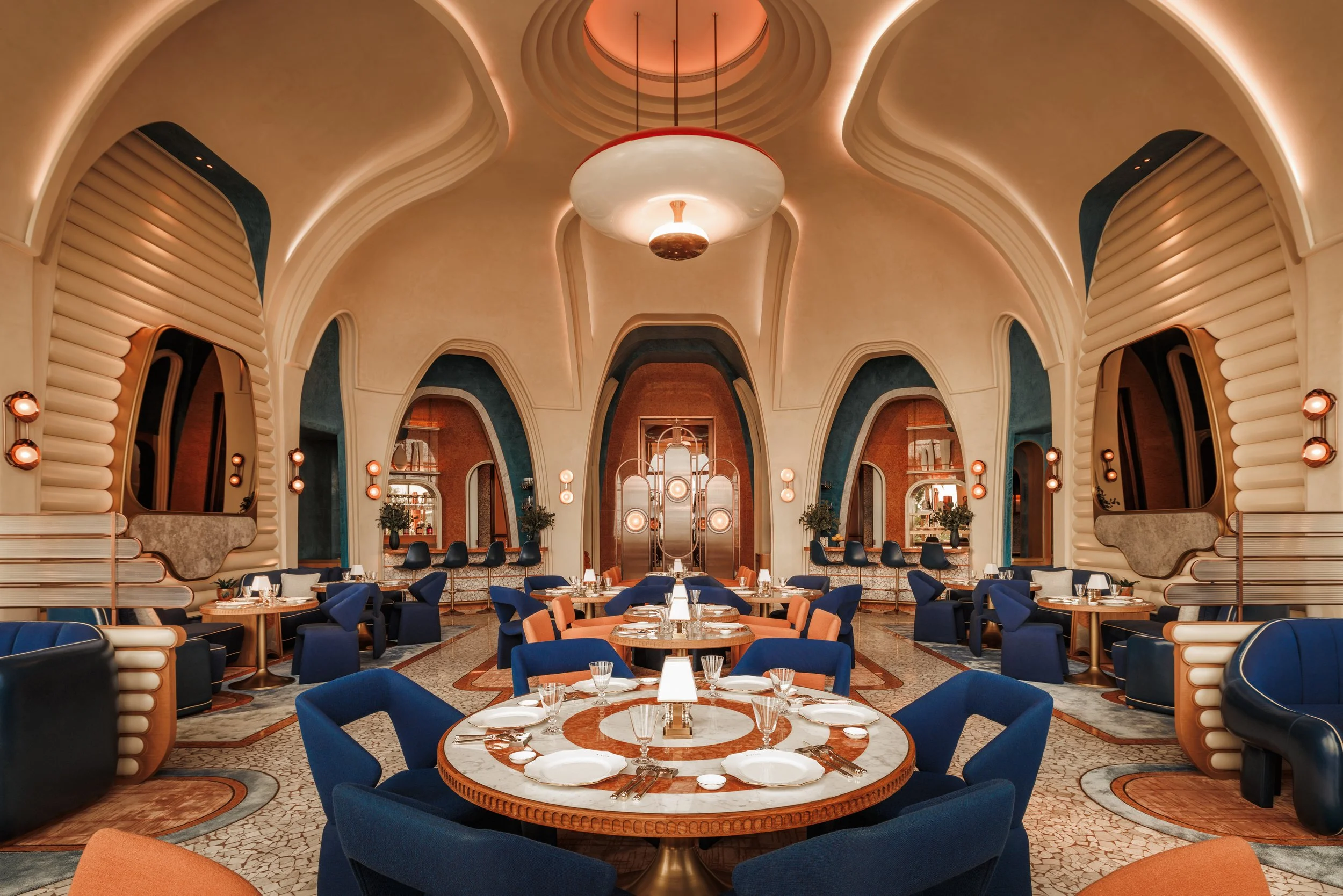
The arrival sequence at Rialto is deliberately choreographed. Guests move from the hotel’s expansive public areas into a more intimate, cinematic environment where lighting softens, textures deepen, and the mood shifts. This sense of transition, so integral to great hospitality design, creates a feeling of anticipation, echoing the experience of entering a historic Italian opera house or a grand Milanese dining salon.
Architectural gestures play a starring role. Layered ceilings, rhythmic arches, and carefully framed sightlines guide movement through the space, while subtle changes in level and material demarcate zones without disrupting flow. The design encourages both spectacle and privacy, allowing diners to feel simultaneously part of the scene and cocooned within it.
Materiality as Storytelling
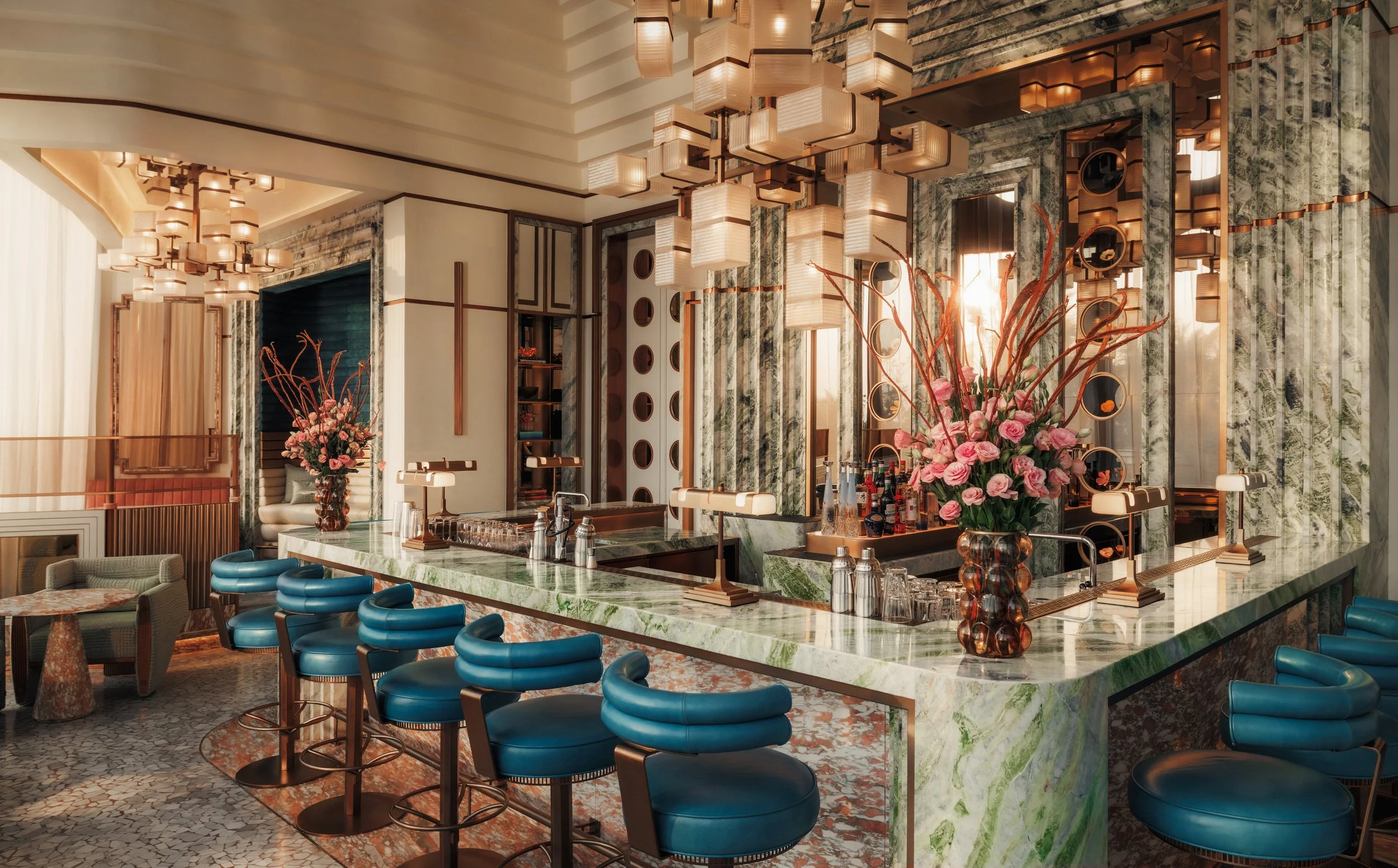
At the heart of Rialto’s design language is an expressive yet disciplined approach to materials. Rich marbles, dark timbers, polished metals, and plush upholstery create a tactile environment that feels indulgent without excess. The palette is warm and enveloping; deep ambers, burnished bronzes, and muted jewel tones, evoking the interiors of classic Italian dining rooms while remaining unmistakably contemporary.
Stone surfaces anchor the space with a sense of permanence, while reflective finishes introduce depth and movement, catching light and subtly animating the room as day transitions into evening. Decorative detailing is precise rather than ornamental, allowing craftsmanship to take precedence over overt embellishment.

Lighting as a Design Instrument
Lighting plays a crucial role in shaping the atmosphere at Rialto. Rather than functioning purely as a practical necessity, it is treated as a design instrument, one that enhances mood, highlights architectural moments, and flatters both food and guests.
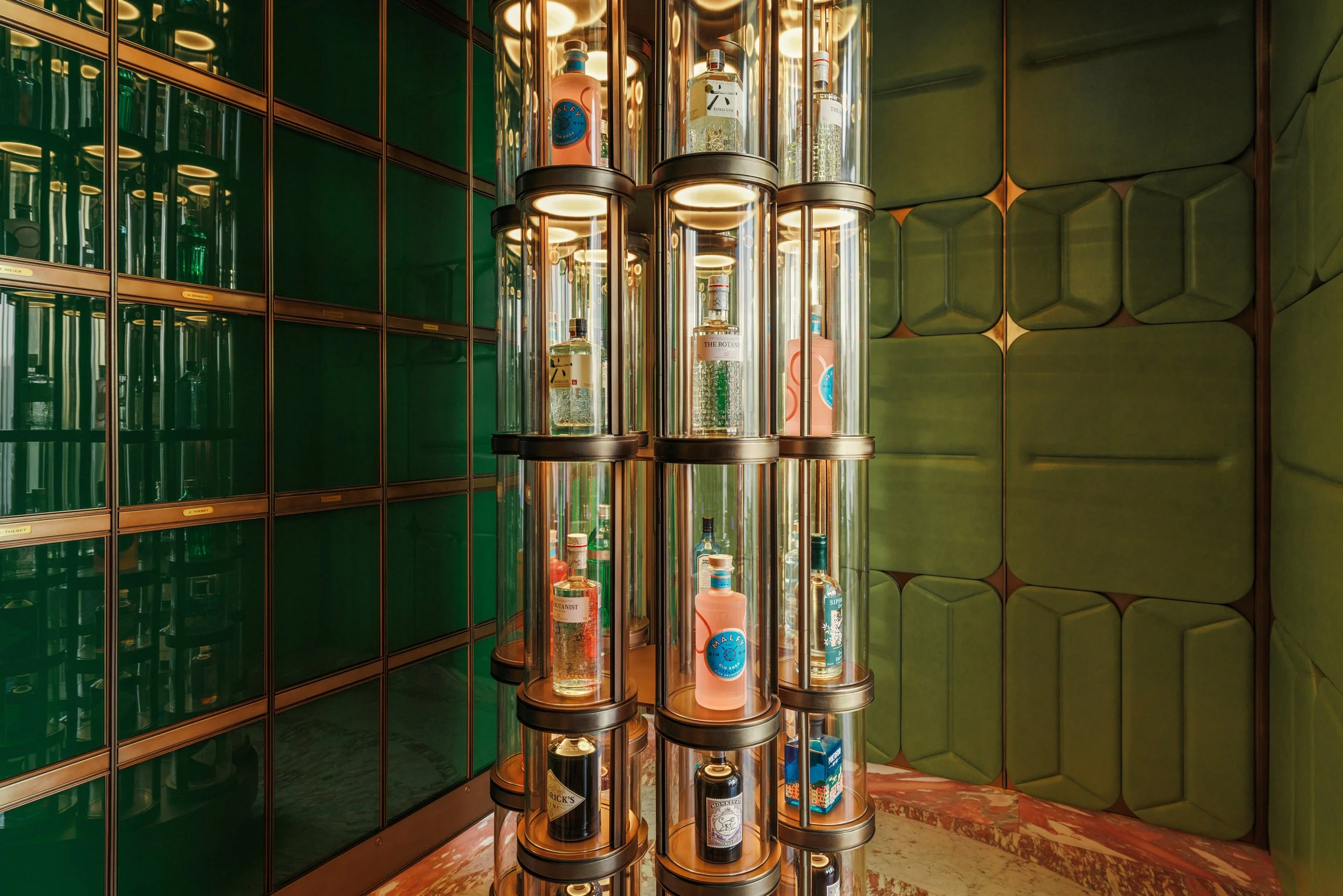
Low-level ambient lighting creates an intimate atmosphere, while accent lighting highlights key focal points such as the bar, artwork, and curated shelving displays. The result is a carefully calibrated balance between drama and comfort, ensuring that the restaurant feels equally suited to long, leisurely lunches and elegant evening dining.
A Spatial Rhythm Designed for Social Dining
Rialto’s layout reflects the Italian philosophy of dining as a social ritual. The space is organised to encourage interaction among guests, diners, and staff, and between the kitchen and the dining room. Banquettes foster communal energy, while discreetly positioned tables offer quieter moments for private conversation.
Sightlines are intentionally open, allowing glimpses of activity without overwhelming the senses. This sense of visual connection reinforces the restaurant’s theatrical undercurrent, where movement, sound, and light form part of the overall experience.


Culinary Theatre Meets Architectural Precision
While the design provides the stage, the culinary offering at Rialto completes the performance. The restaurant’s Italian menu, rooted in tradition yet elevated through technique and presentation, is mirrored by an interior that honours heritage while embracing modernity. Together, food and design create a holistic narrative, one where neither element dominates but instead enhances the other.
Open views towards preparation areas and service stations subtly reinforce this sense of theatre, reminding diners that craftsmanship, whether culinary or architectural, is central to the experience.

Rialto as Part of Jumeirah Marsa Al Arab’s Design Vision
Rialto forms part of a wider design-led narrative within Jumeirah Marsa Al Arab, a hotel that positions itself as a cultural destination as much as a luxury retreat. Each restaurant and bar within the property offers a distinct identity, yet Rialto stands out for its cinematic sensibility and emotional resonance.
By blending Italian design references with contemporary hospitality thinking, Rialto avoids pastiche in favour of timelessness. It is a space that feels rooted in history yet entirely relevant to Dubai’s evolving dining scene: confident, elegant, and deeply atmospheric.

A Destination for Design-Led Dining in Dubai
In a city renowned for its ambitious hospitality projects, Rialto distinguishes itself through nuance rather than spectacle. Its success lies in restraint, craftsmanship, and storytelling; qualities that elevate it beyond a typical hotel restaurant.
For guests seeking a dining experience where interior design, architecture, and cuisine intersect, Rialto at Jumeirah Marsa Al Arab offers a compelling proposition. It is a restaurant designed not just to impress, but to linger in the memory, long after the final course has been served.
More Stories